High triglycerides can be a cardiovascular risk factor; they are not a diagnosis on their own.
Educational guide only — not medical advice. Always review results with a qualified clinician.
7 min read
··Last updated
NNoryaAI
High triglycerides: what your blood test result means
Triglycerides are the most common type of fat (lipid) in your body. When you eat, your body converts any calories it doesn't need to use right away into triglycerides, which are stored in fat cells and later released for energy between meals. A routine blood test called a lipid panel measures triglycerides along with total cholesterol, LDL cholesterol, and HDL cholesterol to assess your cardiovascular risk profile.
While some level of triglycerides is necessary for normal body function, elevated triglycerides—a condition called hypertriglyceridemia—can significantly increase the risk of heart disease, stroke, and pancreatitis. Studies consistently show that high triglyceride levels are an independent risk factor for atherosclerotic cardiovascular disease, even after adjusting for other lipid markers. Understanding your triglyceride level is therefore a crucial part of managing your overall metabolic health.
This guide explains what triglycerides are, how to interpret your results, what causes elevated levels, and what lifestyle changes and treatments are available. It is educational and does not replace medical advice. Always discuss your lipid panel results with your doctor.
What are triglycerides?
Triglycerides are molecules composed of three fatty acid chains attached to a glycerol backbone. They are the primary form in which the body stores fat. After you eat a meal, your intestines absorb dietary fats and package them into lipoproteins called chylomicrons, which transport triglycerides through the bloodstream to tissues that need energy or store fat. The liver also produces triglycerides from excess carbohydrates and packages them into very-low-density lipoproteins (VLDL).
An enzyme called lipoprotein lipase, located on the surface of blood vessel walls, breaks down triglycerides in circulating lipoproteins so that fatty acids can enter muscle cells (for energy) or adipose tissue (for storage). When caloric intake consistently exceeds expenditure—especially from sugars, refined carbohydrates, and alcohol—the liver ramps up VLDL production, and triglyceride levels in the blood rise.
Because triglyceride levels are heavily influenced by recent food intake, your doctor will typically ask you to fast for 9–12 hours before having a lipid panel drawn. Non-fasting triglyceride levels may be 20–30% higher than fasting values, though recent guidelines accept non-fasting samples for initial screening.
Triglyceride reference ranges
Category
Fasting level (mg/dL)
Fasting level (mmol/L)
Normal
< 150
< 1.7
Borderline high
150 – 199
1.7 – 2.2
High
200 – 499
2.3 – 5.6
Very high
≥ 500
≥ 5.6
These categories are based on the National Cholesterol Education Program (NCEP) Adult Treatment Panel III guidelines and are widely adopted worldwide. An optimal triglyceride level is below 100 mg/dL, which is associated with the lowest cardiovascular risk. Borderline-high levels signal the need for lifestyle modifications, while high and very-high levels often require a combination of lifestyle changes and medication.
It is important to note that triglyceride levels can fluctuate significantly from day to day—by as much as 20–30%—based on diet, exercise, alcohol intake, and illness. A single measurement should be confirmed with a repeat test before making treatment decisions. Very high levels (≥500 mg/dL) require urgent attention due to the risk of acute pancreatitis.
Causes of high triglycerides
Elevated triglycerides can result from lifestyle factors, underlying medical conditions, medications, or genetic predisposition. Understanding the root cause is essential for choosing the right treatment approach:
Lifestyle and dietary factors:
Excessive caloric intake – consuming more calories than the body can burn leads to increased VLDL production by the liver.
High intake of refined carbohydrates and sugars – white bread, pastries, sweetened beverages, and fruit juices stimulate hepatic de-novo lipogenesis, converting excess glucose into triglycerides.
Excess alcohol consumption – alcohol is metabolized by the liver and promotes triglyceride synthesis. Even moderate drinking can raise levels in susceptible individuals.
Sedentary lifestyle – physical inactivity reduces lipoprotein lipase activity, slowing triglyceride clearance from the blood.
Obesity – particularly visceral (abdominal) adiposity is strongly correlated with hypertriglyceridemia and insulin resistance.
Medical conditions:
Type 2 diabetes and insulin resistance – insulin normally suppresses hepatic VLDL production; when tissues become resistant to insulin, the liver overproduces triglyceride-rich particles.
Chronic kidney disease and nephrotic syndrome – altered lipoprotein metabolism and increased hepatic lipid synthesis.
Genetic factors – familial hypertriglyceridemia and familial combined hyperlipidemia are inherited conditions that cause persistently elevated triglycerides regardless of diet.
Medications: Beta-blockers, thiazide diuretics, corticosteroids, oral estrogens, tamoxifen, retinoids, and some antiretroviral drugs can raise triglyceride levels as a side effect. If your triglycerides rose after starting a new medication, discuss alternatives with your doctor.
Triglycerides vs. cholesterol: understanding the difference
Although both triglycerides and cholesterol are lipids carried in the blood, they serve fundamentally different purposes. Triglycerides are used for energy storage and release; they are the body's primary fuel reserve. Cholesterol, on the other hand, is a structural component of cell membranes and a precursor for hormones (estrogen, testosterone, cortisol), bile acids, and vitamin D.
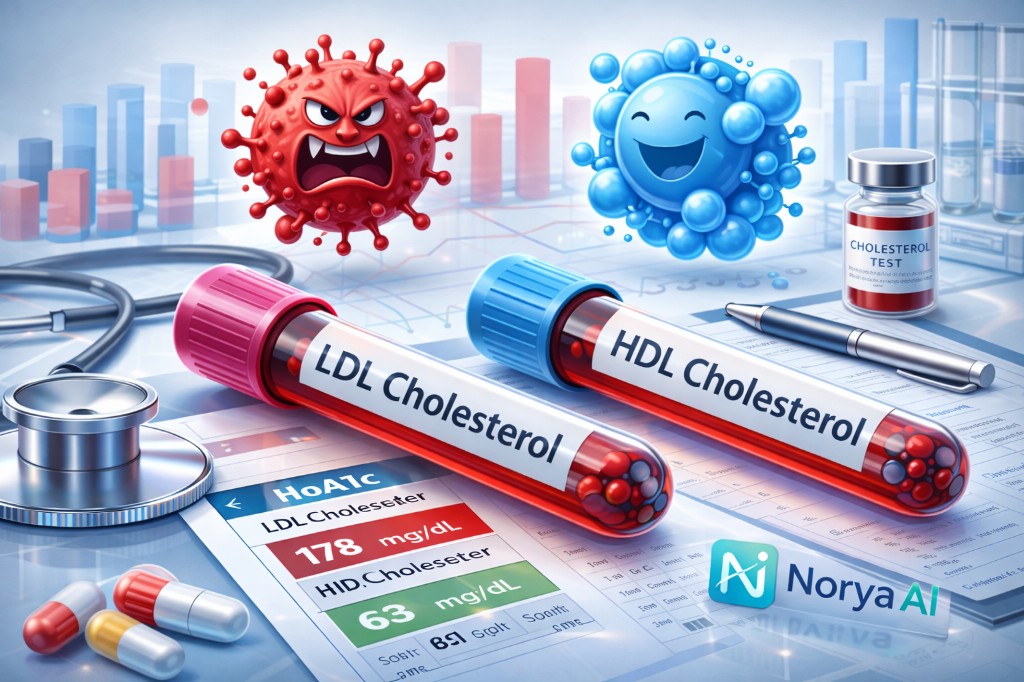
On a standard lipid panel, you will see several cholesterol-related measurements: total cholesterol, LDL (low-density lipoprotein) cholesterol—often called “bad” cholesterol because elevated levels promote plaque formation in arteries—and HDL (high-density lipoprotein) cholesterol, known as “good” cholesterol because it helps remove cholesterol from artery walls. Triglycerides are measured separately but are closely interrelated with these cholesterol fractions. For more on LDL and HDL, see our guides on LDL cholesterol and LDL vs HDL. Clinicians often also interpret ApoB and Lp(a) alongside triglycerides when assessing atherogenic particle load and inherited risk context.
High triglycerides frequently coexist with low HDL and the presence of small, dense LDL particles—a combination sometimes called the atherogenic lipid triad or lipid triad of metabolic syndrome. This pattern is particularly dangerous because small dense LDL particles penetrate artery walls more easily, accelerating atherosclerosis. Thus, even if your LDL number looks acceptable, high triglycerides may signal that your LDL particles are of the more harmful subtype.
Triglycerides and cardiovascular risk
For decades, the link between triglycerides and heart disease was debated. While LDL cholesterol has long been established as a causal factor in atherosclerosis, the role of triglycerides was less clear because high triglycerides often coexist with other metabolic abnormalities. However, large-scale genetic studies (Mendelian randomization) have now confirmed that triglyceride-rich lipoproteins are independently causal for atherosclerotic cardiovascular disease.
Elevated triglycerides contribute to cardiovascular risk through several mechanisms. Remnant particles—the partially metabolized remains of VLDL and chylomicrons—can penetrate the artery wall and trigger inflammation, similar to LDL. High triglycerides also promote a pro-thrombotic state by increasing levels of plasminogen activator inhibitor-1 (PAI-1) and fibrinogen, making blood clots more likely. Additionally, very high triglyceride levels (≥500 mg/dL) carry the serious risk of acute pancreatitis—inflammation of the pancreas that can be life-threatening.
The combination of high triglycerides with other elements of metabolic syndrome—central obesity, high blood pressure, elevated fasting glucose, and low HDL cholesterol—creates a synergistic increase in cardiovascular risk that is greater than the sum of individual risk factors. Addressing triglycerides is therefore an important part of comprehensive cardiovascular risk management.
Lifestyle and dietary changes to lower triglycerides
Lifestyle modification is the cornerstone of triglyceride management and can reduce levels by 20–50% or more. The most effective strategies include:
Reduce refined carbohydrates and added sugars – limit white bread, pasta, rice, sweets, and especially sugar-sweetened beverages. Fructose is particularly potent at raising triglycerides because it is metabolized directly by the liver.
Limit or eliminate alcohol – even small amounts of alcohol can significantly raise triglycerides in sensitive individuals. Complete abstinence may be necessary for people with very high levels.
Increase omega-3 fatty acid intake – fatty fish (salmon, mackerel, sardines, herring) provide EPA and DHA, which reduce hepatic VLDL production. The American Heart Association recommends eating fish at least twice per week.
Choose healthy fats – replace saturated fats with monounsaturated fats (olive oil, avocados, nuts) and polyunsaturated fats (flaxseed, walnuts).
Exercise regularly – aim for at least 150 minutes per week of moderate-intensity aerobic activity. Exercise increases lipoprotein lipase activity, accelerating triglyceride clearance from the blood.
Lose excess weight – even a 5–10% weight loss can lower triglycerides by 20% or more.
Increase fiber intake – soluble fiber from oats, beans, lentils, and vegetables slows carbohydrate absorption.
A Mediterranean-style diet that emphasizes vegetables, fruits, whole grains, legumes, fish, and olive oil while minimizing processed foods and sweets has been shown to effectively reduce triglycerides and improve overall cardiovascular health. Combining dietary changes with regular physical activity produces the most significant and sustainable results.
Medications for high triglycerides
When lifestyle changes alone are insufficient—particularly when triglycerides remain above 200 mg/dL despite diet and exercise—your doctor may consider medications:
Fibrates (fenofibrate, gemfibrozil) – these drugs activate PPAR-alpha receptors, increasing lipoprotein lipase activity and reducing hepatic VLDL production. They can lower triglycerides by 30–50%. Fibrates are often the first-line drug specifically for hypertriglyceridemia.
Omega-3 fatty acid prescriptions (icosapent ethyl / Vascepa) – prescription-strength EPA has been shown to reduce cardiovascular events in the REDUCE-IT trial. Doses of 2–4 g/day can lower triglycerides by 20–45%.
Statins – while primarily used for LDL cholesterol reduction, statins also modestly lower triglycerides by 10–20%. They are often prescribed when both LDL and triglycerides are elevated.
Niacin (nicotinic acid) – niacin can lower triglycerides by 20–35% and raise HDL, but its use has declined due to side effects (flushing, liver toxicity) and lack of proven cardiovascular benefit in recent trials.
For patients with very high triglycerides (≥500 mg/dL), treatment is urgent to prevent acute pancreatitis. In these cases, fibrates or high-dose omega-3s are typically initiated alongside strict dietary modification. Combination therapy may be necessary for patients with severely elevated levels resistant to single agents. All medications should be used under medical supervision with regular monitoring of liver function and muscle enzymes.
When to see a doctor
You should consult your doctor about your triglyceride levels in the following situations:
Your fasting triglycerides are above 150 mg/dL on two or more occasions.
Your triglycerides are 200–499 mg/dL—this range requires active management with lifestyle changes and possibly medication, especially if you have other cardiovascular risk factors.
Your triglycerides are ≥500 mg/dL—this is a medical urgency due to pancreatitis risk and requires prompt treatment.
You have signs of metabolic syndrome: large waist circumference, high blood pressure, elevated fasting glucose, low HDL cholesterol, along with high triglycerides.
You experience severe abdominal pain with very high triglycerides, which could indicate pancreatitis.
You have a family history of premature heart disease or familial hypertriglyceridemia.
Adults should have a lipid panel checked at least every 4–6 years starting at age 20, and more frequently if they have risk factors such as obesity, diabetes, or a family history of dyslipidemia. Early detection and management of high triglycerides can significantly reduce the long-term risk of cardiovascular events.
How Norya helps you understand your triglyceride results
Understanding a lipid panel with multiple numbers can be confusing. Norya simplifies this process: upload your blood test results and receive a structured, easy-to-understand health summary within minutes. Norya analyzes your triglycerides alongside your cholesterol fractions, glucose, and other markers to give you a comprehensive view of your metabolic health.
The report highlights which values fall outside the normal range, explains what they mean in plain language, and helps you prepare informed questions for your next doctor visit. Whether your triglycerides are borderline or very high, Norya ensures you walk into your appointment with clarity. Start your free analysis with Norya.
Disclaimer
This guide is for informational purposes only and does not replace medical advice or diagnosis. Always discuss your results with a healthcare professional. Start analysis with Norya
Trust & review
How this guide should be used
This article is educational and should be reviewed alongside our medical review, methodology, and transparency pages. Use it to prepare for a clinician conversation, not as a diagnosis.