Understand target LDL ranges, how risk factors change your goal values, and what your lab report number really means.
Educational guide only — not medical advice. Always review results with a qualified clinician.
7 min read
··Last updated
NNoryaAI
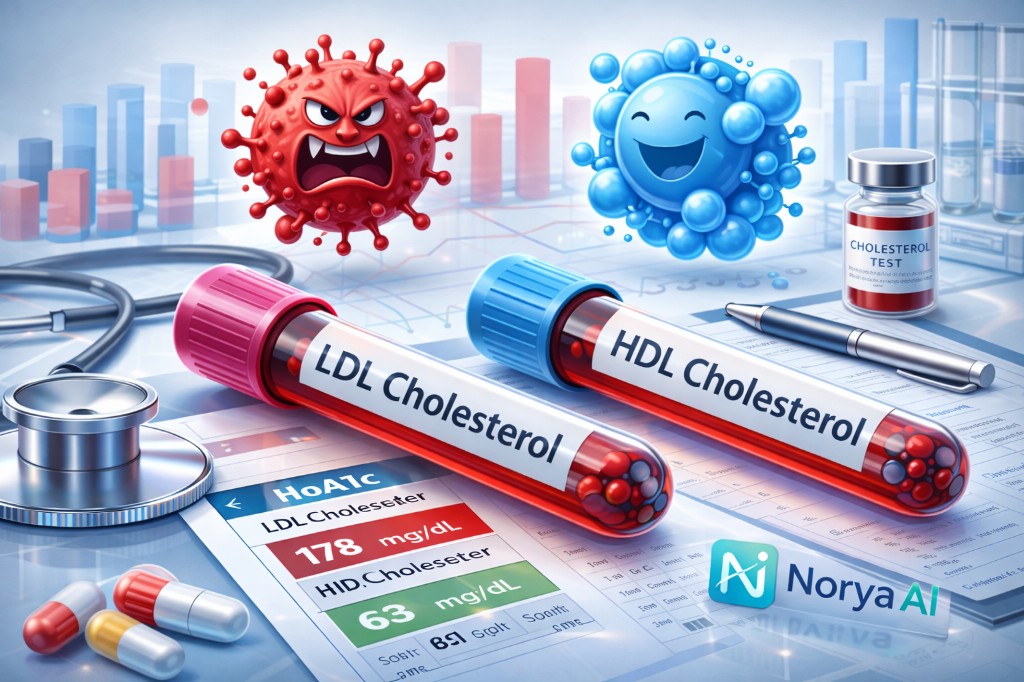
What is LDL cholesterol?
Cholesterol is a fat‑like substance your body uses to build cell membranes and hormones. In the bloodstream it travels inside
lipoprotein particles. LDL (low‑density lipoprotein) delivers cholesterol towards the artery wall and is therefore often called
the “bad cholesterol”.
When LDL stays high for many years it accelerates atherosclerosis – fatty build‑up in the arteries – which increases the risk of
heart attack and stroke.
Clinicians sometimes also discuss ApoB (atherogenic particle load) and Lp(a) (a genetically influenced lipoprotein) alongside LDL—these are separate markers and may not be on every basic panel.
Target LDL levels by risk group
Modern guidelines do not use a single “normal” LDL value. Instead they define target ranges based on overall cardiovascular risk:
Low / moderate risk: often aim for LDL below 130 mg/dL.
High risk (diabetes, hypertension, smoking, strong family history): usually aim for
below 100 mg/dL.
Very high risk (previous heart attack, stent, stroke): targets may be below 70 mg/dL or even 55 mg/dL.
The reference range printed on your report is usually a generic interval. Your personal goal can be lower than that, which is
why LDL must always be interpreted together with your doctor.
What if your LDL is high?
An LDL value is never interpreted in isolation. The same number – for example 140 mg/dL – can mean different things:
In a young person with no other risk factors it may represent a modest risk.
In someone with diabetes, high blood pressure and smoking it may signal a clearly increased risk requiring aggressive treatment.
Rather than focusing only on “high” or “low”, discuss your global cardiovascular risk and target range with your clinician.
How to lower LDL cholesterol
Reaching your LDL target usually involves three pillars:
Nutrition: reduce saturated and trans fats, favour vegetables, whole grains and olive‑oil‑based meals (Mediterranean pattern).
Physical activity: at least 150 minutes of moderate exercise per week can help lower LDL and support HDL (“good” cholesterol).
Medication when needed: statins and other drugs chosen by your doctor are essential in high and very‑high‑risk groups.
This article is for information only and does not replace medical advice. Always consult your doctor before
starting or changing any treatment.
Trust & review
How this guide should be used
This article is educational and should be reviewed alongside our medical review, methodology, and transparency pages. Use it to prepare for a clinician conversation, not as a diagnosis.