Cholesterol Blood Test Explained: How to Read Your Lipid Panel
What LDL and HDL mean, how to interpret your lipid panel, non-HDL and targets, and when to follow up with a clinician.
Educational guide only — not medical advice. Always review results with a qualified clinician.
10 min read
··Last updated
NNoryaAI
What LDL and HDL are
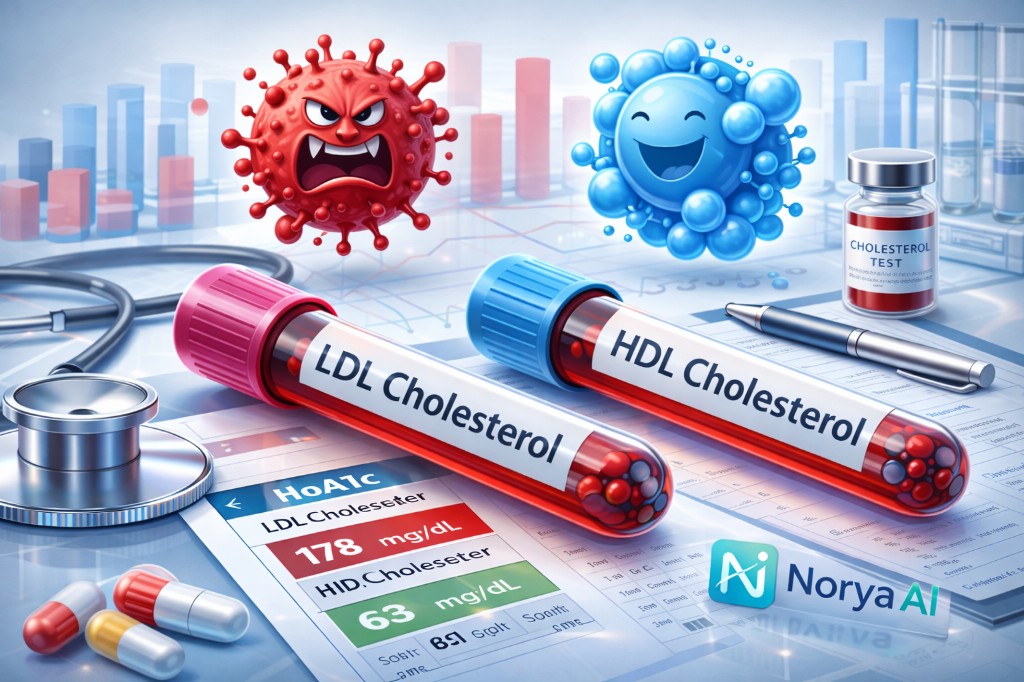
LDL (low-density lipoprotein) and HDL (high-density lipoprotein) are lipoproteins that carry cholesterol in the blood. LDL delivers cholesterol to tissues; in excess it can contribute to plaque in artery walls. HDL helps remove cholesterol from tissues and carries it back to the liver. In routine lipid panels, LDL is often labelled “bad” and HDL “good” cholesterol—useful shorthand, but interpretation depends on your full profile and risk factors. This overview is for information only; it does not replace a clinical assessment.
The full lipid panel: Total, LDL, HDL, Triglycerides
A standard lipid panel usually includes:
Marker
What it reflects
Total cholesterol
Sum of cholesterol in all lipoproteins (LDL + HDL + VLDL and other fractions).
LDL cholesterol
Main carrier of cholesterol into tissues; primary target for risk reduction in many guidelines.
HDL cholesterol
Carries cholesterol from tissues to the liver; higher levels are generally associated with lower cardiovascular risk.
Triglycerides (TG)
Fats in the blood; high levels can increase cardiovascular and pancreatitis risk; often measured fasting.
LDL may be reported as calculated (e.g. Friedewald) or directly measured. Your clinician interprets these values in context.
Non-HDL cholesterol explained
Non-HDL cholesterol is total cholesterol minus HDL (Non-HDL = Total − HDL). It includes LDL and all other atherogenic lipoproteins (e.g. VLDL, remnant particles). Guidelines often use it as a secondary or alternative target because it captures risk from non-LDL particles and does not depend on fasting. Your doctor may use either LDL or non-HDL (or both) to guide decisions; targets depend on your risk profile.
Typical targets and reference ranges
Targets and reference ranges vary by lab and guideline and depend on your cardiovascular risk (age, sex, smoking, blood pressure, diabetes, family history, etc.). The following are for general context only; your clinician sets your individual goals.
HDL: Higher is generally better. Sex-specific cut-offs may apply (e.g. >40 mg/dL men, >50 mg/dL women in some guidelines). Very high HDL can sometimes be genetic and does not always mean lower risk.
LDL: Lower targets for higher-risk patients (e.g. <100, <70, or <55 mg/dL depending on risk). No single “normal” applies to everyone.
Triglycerides: Fasting <150 mg/dL is often used as “normal”; higher tiers (e.g. 150–199, 200–499, ≥500 mg/dL) may prompt lifestyle or medical follow-up. Non-fasting cut-offs differ; follow your lab’s and doctor’s guidance.
What can raise LDL or triglycerides or lower HDL
Many factors influence lipid levels:
Diet: Saturated and trans fats can raise LDL; excess calories and refined carbs can raise TG; very low fat may lower HDL.
Genetics: Familial hypercholesterolaemia and other inherited patterns can raise LDL or TG regardless of diet.
Medical conditions: Hypothyroidism, diabetes, kidney disease, obesity, and liver disease can affect lipids.
Alcohol: Moderate intake may raise HDL; excess can raise TG.
Medications: Some drugs (e.g. steroids, certain blood pressure or HIV drugs) can raise LDL or TG or lower HDL.
Inactivity: Sedentary lifestyle can lower HDL and contribute to higher TG.
Your doctor can help identify relevant factors and next steps.
When to follow up with a clinician
See a doctor or nurse for interpretation and next steps if:
Your LDL is very high or above the target suggested for your risk.
Triglycerides are very high (e.g. ≥500 mg/dL), which can increase pancreatitis risk.
You have a family history of early heart disease or very high cholesterol.
You have symptoms that could relate to heart or vascular disease (e.g. chest pain, shortness of breath).
You have diabetes, high blood pressure, or other cardiovascular risk factors and need a lipid management plan.
This article is for information only; it does not replace a clinical assessment.
Next tests a clinician may consider
Depending on your results and risk, your doctor may consider:
ApoB: Reflects the number of atherogenic particles; sometimes used alongside or instead of LDL.
Lp(a): Genetically determined; high levels increase cardiovascular risk; one-time measurement often sufficient.
hs-CRP: Marker of inflammation; may be used in risk assessment.
HbA1c: To screen for or monitor diabetes.
TSH: To check thyroid function if lipids are abnormal.
Liver and kidney function: If medication or secondary causes are being considered.
Risk calculators: To estimate 10-year cardiovascular risk and guide targets.
Which tests are ordered is a clinical decision made with you by your doctor.
Practical lifestyle overview
General measures that often support healthy lipid levels (not a substitute for medical advice; no “cure” claims):
Fibre: Adequate fibre from vegetables, fruits, and whole grains.
Unsaturated fats: Prefer sources such as olive oil, nuts, and oily fish; limit saturated and trans fats.
Activity: Regular physical activity can help raise HDL and lower TG; follow your doctor’s recommendations.
Weight: If your doctor has recommended weight management, gradual changes are usually more sustainable.
Smoking cessation: Improves HDL and overall cardiovascular risk.
Sleep: Adequate sleep supports general metabolic health.
Frequently asked questions
Is high HDL always good?
Generally higher HDL is associated with lower cardiovascular risk, but very high HDL can be genetic and not always protective. Some drugs that raise HDL have not been shown to reduce events. Your clinician interprets your level in context.
Why is my LDL high even with a good diet?
Genetics (e.g. familial hypercholesterolaemia), hypothyroidism, diabetes, kidney disease, or certain medications can raise LDL despite a healthy diet. Your doctor can help identify causes and options.
Do I need to fast for a lipid panel?
For LDL and total cholesterol, fasting (often 9–12 hours) is traditionally used; non-fasting panels are accepted in some guidelines. Triglycerides are most comparable when fasting. Follow your lab’s instructions.
What is non-HDL cholesterol?
Non-HDL is total cholesterol minus HDL. It includes LDL and other atherogenic particles and is often used as an alternative or additional target in guidelines.
How fast can lipids change?
Lifestyle changes can shift lipids within weeks to months; medication effects vary. Your doctor will advise on when to recheck.
Triglycerides vs LDL—what’s the difference?
LDL is the main cholesterol-carrying particle targeted for cardiovascular risk; triglycerides are a different type of blood fat. Both can be elevated and both matter for risk; management may address both.
ApoB vs LDL—which matters?
ApoB reflects the number of atherogenic particles; LDL cholesterol reflects the cholesterol in those particles. Guidelines may use one or both; your clinician can explain how they apply to you.
Should I get Lp(a) tested?
Lp(a) is a genetically determined risk factor. Testing can be useful in people with family history of early heart disease or unclear risk. Your doctor can recommend whether and when to test.
Medical disclaimer
This content is for information only and does not constitute medical advice, diagnosis, or treatment. Always discuss your results and any symptoms with a qualified healthcare provider. Do not start or change diet, exercise, or medication based solely on this article. If you have concerns about your health, seek professional medical care.
Trust & review
How this guide should be used
This article is educational and should be reviewed alongside our medical review, methodology, and transparency pages. Use it to prepare for a clinician conversation, not as a diagnosis.