Understand your thyroid panel results — TSH, Free T4, Free T3, TPO antibodies — and learn what they mean for your health.
Educational guide only — not medical advice. Always review results with a qualified clinician.
14 min read
··Last updated
NNoryaAI
What Is a Thyroid Panel?
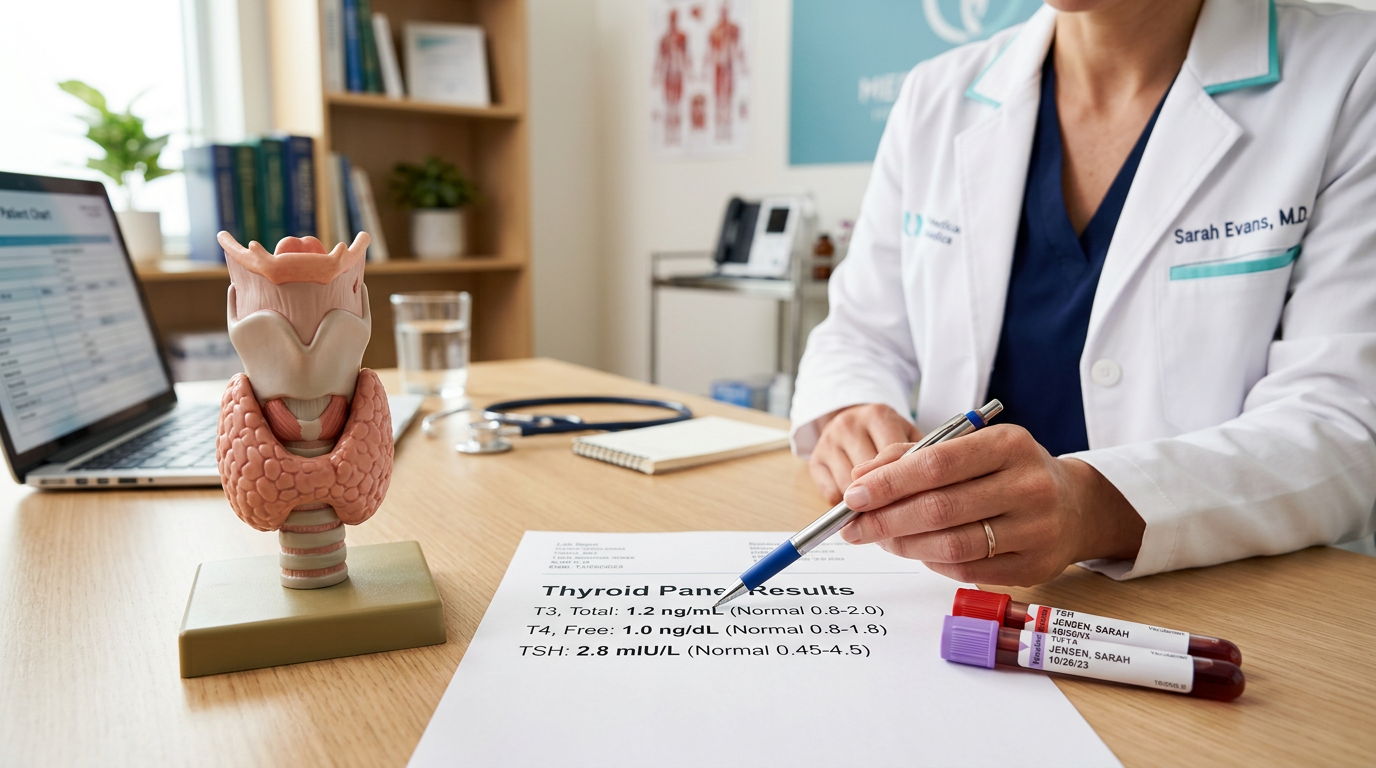
A thyroid panel is a group of blood tests that evaluate how well your thyroid gland is functioning. The thyroid is a small, butterfly-shaped gland in your neck that produces hormones controlling metabolism, energy, body temperature, heart rate, and more.
A standard thyroid panel typically includes TSH, Free T4, and sometimes Free T3, Total T4, TPO antibodies, and thyroglobulin antibodies. Understanding these values is crucial because thyroid disorders affect an estimated 200 million people worldwide.
TSH (Thyroid Stimulating Hormone)
TSH is produced by the pituitary gland and tells your thyroid how much hormone to make. It's the most important screening test for thyroid function.
Normal range: 0.4–4.0 mIU/L (may vary by lab)
High TSH means your thyroid is underactive (hypothyroidism) — your pituitary is working harder to stimulate a sluggish thyroid. Symptoms: fatigue, weight gain, cold intolerance, dry skin, constipation.
Low TSH means your thyroid is overactive (hyperthyroidism) — your pituitary is suppressed because thyroid hormone levels are already too high. Symptoms: weight loss, anxiety, rapid heartbeat, heat intolerance, tremor.
Important: TSH works inversely to thyroid hormones. High TSH = low thyroid function. Low TSH = high thyroid function. This confuses many patients.
Free T4 (Thyroxine)
T4 is the main hormone produced by the thyroid. "Free" T4 measures the unbound, active form available for your body to use.
Normal range: 0.8–1.8 ng/dL (or 10–23 pmol/L)
Low Free T4 with high TSH confirms hypothyroidism. High Free T4 with low TSH confirms hyperthyroidism. When Free T4 is normal but TSH is abnormal, it's called subclinical thyroid disease.
Free T3 (Triiodothyronine)
T3 is the more biologically active thyroid hormone. Most T3 is converted from T4 in your body's tissues. Free T3 measures the unbound, active form.
Normal range: 2.3–4.2 pg/mL (or 3.5–6.5 pmol/L)
T3 is especially important in diagnosing hyperthyroidism, as some patients have elevated T3 even when T4 is normal (T3 thyrotoxicosis). Low T3 can occur with severe illness, malnutrition, or certain medications.
Thyroid Antibodies: TPO & Thyroglobulin
Thyroid antibodies indicate autoimmune thyroid disease — the most common cause of thyroid disorders in developed countries.
TPO Antibodies (Anti-TPO): Present in ~95% of Hashimoto's thyroiditis (autoimmune hypothyroidism) and ~75% of Graves' disease. Normal: < 35 IU/mL.
Thyroglobulin Antibodies (Anti-Tg): Present in 60-80% of Hashimoto's and used to monitor thyroid cancer recurrence.
TSH Receptor Antibodies (TRAb/TSI): Specific for Graves' disease (autoimmune hyperthyroidism).
Having positive antibodies doesn't always mean you have active disease — some people have elevated antibodies for years before developing thyroid dysfunction.
Understanding Hypothyroidism
Hypothyroidism (underactive thyroid) is the most common thyroid disorder. Your thyroid doesn't produce enough hormones.
Key lab pattern: High TSH + Low Free T4
Common symptoms:
Fatigue and sluggishness
Weight gain despite normal eating
Cold intolerance
Dry skin and hair
Constipation
Depression
Muscle weakness
Elevated cholesterol
Common causes: Hashimoto's thyroiditis (autoimmune), iodine deficiency, thyroid surgery, radiation therapy, certain medications (lithium, amiodarone).
Understanding Hyperthyroidism
Hyperthyroidism (overactive thyroid) means your thyroid produces too much hormone, speeding up your metabolism.
Key lab pattern: Low TSH + High Free T4 (and/or high Free T3)
Subclinical thyroid disease is when TSH is abnormal but Free T4 and T3 are still in the normal range. It's extremely common and often debated among endocrinologists.
Subclinical hypothyroidism: TSH 4.5–10 mIU/L with normal Free T4. Affects 5-10% of the population. May or may not require treatment — discuss with your doctor.
Subclinical hyperthyroidism: TSH below 0.4 mIU/L with normal Free T4/T3. Less common. May increase risk of atrial fibrillation and osteoporosis.
When Should You Get a Thyroid Panel?
Consider thyroid testing if you experience:
Unexplained fatigue or energy changes
Significant weight changes
Temperature sensitivity (always cold or always hot)
Hair loss or skin changes
Family history of thyroid disease
Pregnancy or planning pregnancy
Age over 60 (routine screening recommended)
History of autoimmune disease
Women are 5-8 times more likely to develop thyroid disease than men.
How NoryaAI Analyzes Your Thyroid Panel
NoryaAI reads your complete thyroid panel and provides:
Clear interpretation of TSH, Free T4, Free T3, and antibody levels
Pattern recognition (hypothyroid vs hyperthyroid vs subclinical)
Comparison against age-specific reference ranges
Plain-language explanations of what your results mean
Doctor-ready summary with flagged abnormal values
Upload your lab results and get your thyroid panel analysis in minutes — no medical jargon, just clear answers.
Trust & review
How this guide should be used
This article is educational and should be reviewed alongside our medical review, methodology, and transparency pages. Use it to prepare for a clinician conversation, not as a diagnosis.