ויטמין D: איך לפרש ערכים נמוכים או גבוהים של 25(OH)D
מדריך על ויטמין D, טווחי 25(OH)D ומתי לפנות לרופא.
מדריך להעשרה בלבד; אינו מהווה ייעוץ רפואי או אבחון. יש להצליב תמיד עם רופא/ה.
12 דק׳ קריאה
··עדכון אחרון
NNoryaAI
What is vitamin D?
Vitamin D is a fat-soluble vitamin that helps regulate calcium and phosphate and supports bone health, muscle function, and immune modulation. It comes in two main forms: D2 (ergocalciferol, from plants/fungi) and D3 (cholecalciferol, from sunlight on skin and from animal sources or supplements). Both can be measured indirectly; the form that best reflects your body’s supply is 25-hydroxyvitamin D, or 25(OH)D. Laboratories typically report total 25(OH)D (D2 + D3), which is why lab results refer to “25(OH)D” or “vitamin D level”—this is the standard marker used to assess deficiency, sufficiency, or excess.
Typical ranges
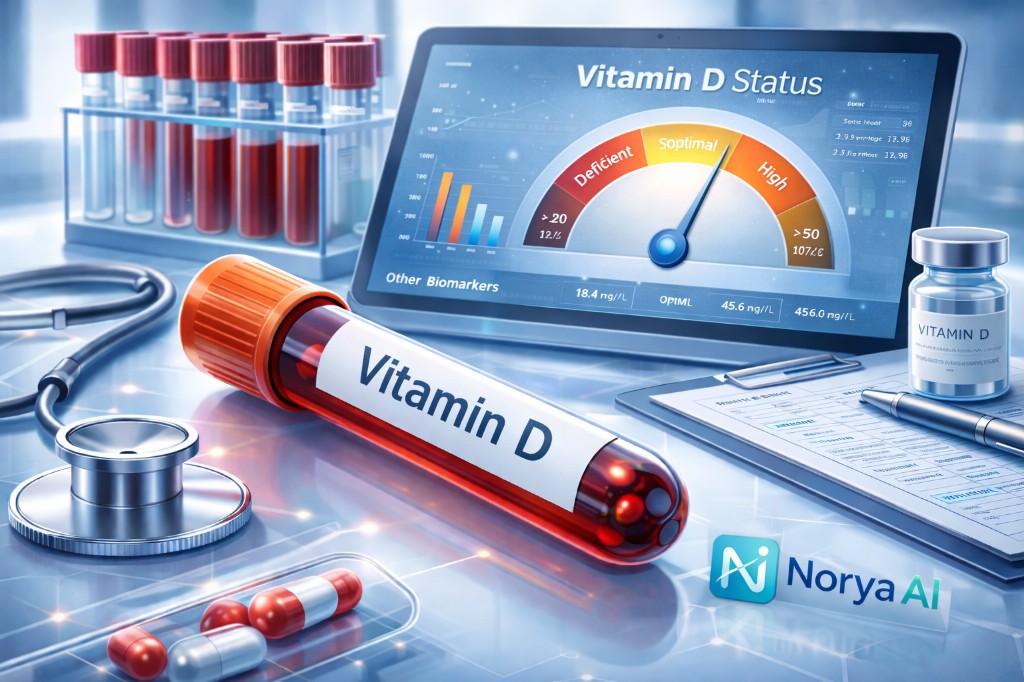
Reference ranges vary by laboratory and method. Always use the range on your own report. The following are approximate, for context only (in ng/mL; multiply by 2.5 for nmol/L):
Deficiency: often <20 ng/mL (≈50 nmol/L).
Insufficiency: often 20–29 ng/mL.
Sufficient: commonly ~30–50 ng/mL for the general population.
Potentially high: >50–60 ng/mL depending on context; not always harmful but worth discussing with a doctor.
Toxicity concern: often cited above ~100 ng/mL (hypercalcemia risk); assessment and any intervention are for a clinician to decide.
Your doctor will interpret your result in light of your age, health conditions, and any supplements or medications.
Causes of low vitamin D
Common reasons for low 25(OH)D include: low sun exposure (latitude, season, clothing, sunscreen, indoor lifestyle); darker skin pigmentation (more melanin reduces vitamin D synthesis in skin); winter months in higher latitudes; obesity (vitamin D can be sequestered in adipose tissue); malabsorption (e.g. coeliac disease, Crohn’s, gastric surgery); liver or kidney disease (altered metabolism of vitamin D); and certain medications that affect absorption or metabolism. More than one factor can apply. A clinician can help identify the most relevant causes for you.
Symptoms and signs
Signs that are sometimes associated with low vitamin D include fatigue, bone or muscle pain, weakness, frequent infections, and low mood. These are non-specific—they can have many other causes. Symptoms alone do not establish a diagnosis; they must be interpreted together with blood tests and clinical history by a doctor. Do not self-diagnose deficiency based only on how you feel.
When vitamin D is high
Elevated 25(OH)D is often due to supplement overuse or dosing errors. Very high levels increase the risk of hypercalcemia (high blood calcium), which can affect the heart, kidneys, and nerves. Red flags that warrant prompt medical attention include: nausea, excessive thirst, frequent urination, confusion, or kidney stones. If your level is high or you take high-dose vitamin D, discuss with a clinician; do not stop or change supplements without medical advice.
Next labs a clinician may check
Depending on your result and history, your doctor may order additional tests to clarify status or rule out complications. These can include: calcium (total and/or ionized), parathyroid hormone (PTH), phosphate, magnesium, alkaline phosphatase (ALP), and kidney function (e.g. creatinine, eGFR). Which tests are needed is a clinical decision made by your doctor.
Practical guidance
Sunlight: sensible, limited exposure (without burning) can help the body make vitamin D; duration and safety depend on skin type, location, and season—your doctor can advise. Diet: fatty fish, fortified dairy or plant milks, egg yolk, and some fortified foods provide vitamin D but often not enough to correct deficiency alone. Supplements: if your doctor recommends supplementation, use the dose they suggest. Avoid mega-doses without clinical supervision. Rechecking 25(OH)D after 8–12 weeks is often used to see if the level has improved; your doctor will advise on timing and target. Do not self-prescribe high doses; excess can be harmful.
Frequently asked questions
How fast does vitamin D increase?
With appropriate supplementation or improved sun exposure, 25(OH)D can begin to rise within several weeks; meaningful change often takes 8–12 weeks. Your doctor can suggest when to recheck.
Can I take vitamin D3 daily?
Many people take a daily maintenance dose recommended by their doctor. The right dose depends on your baseline level, diet, sun exposure, and health; do not exceed amounts advised by a clinician.
Does vitamin D help immunity?
Vitamin D is involved in immune regulation. Adequate levels may support normal immune function, but supplementation is not a substitute for a balanced diet, sleep, or medical care when you are ill. Evidence is nuanced; your doctor can advise for your situation.
What about magnesium or vitamin K2?
Magnesium is involved in vitamin D metabolism; some people have low magnesium. Vitamin K2 is sometimes discussed in relation to bone and cardiovascular health. Neither is a universal “must take” with vitamin D; balance and individual needs matter. Discuss with your doctor before adding supplements.
Is 25(OH)D tested fasting?
Fasting is usually not required for 25(OH)D alone, but your lab may request it if the sample is used for a panel that includes glucose or lipids. Follow the instructions given for your blood draw.
Can I interpret my result myself?
Your result should be interpreted in context (age, health, medications, diet). Your doctor can say whether your level is appropriate for you and whether you need treatment or further tests.
Disclaimer
This content is for information only and does not constitute medical advice or diagnosis. Always discuss your results and symptoms with a doctor. Do not start or change supplements or treatment based solely on this article. If you have concerns about your health, seek professional medical care.
הבן את בדיקת הדם שלך תוך דקות
השתמש ב-NoryaAI להפוך את התוצאות לסיכום בריאות ברור ומסודר.
NoryaAI — הפכו את תוצאות המעבדה לסיכום ברור ומובנה, מוכן לשיתוף עם הרופא.