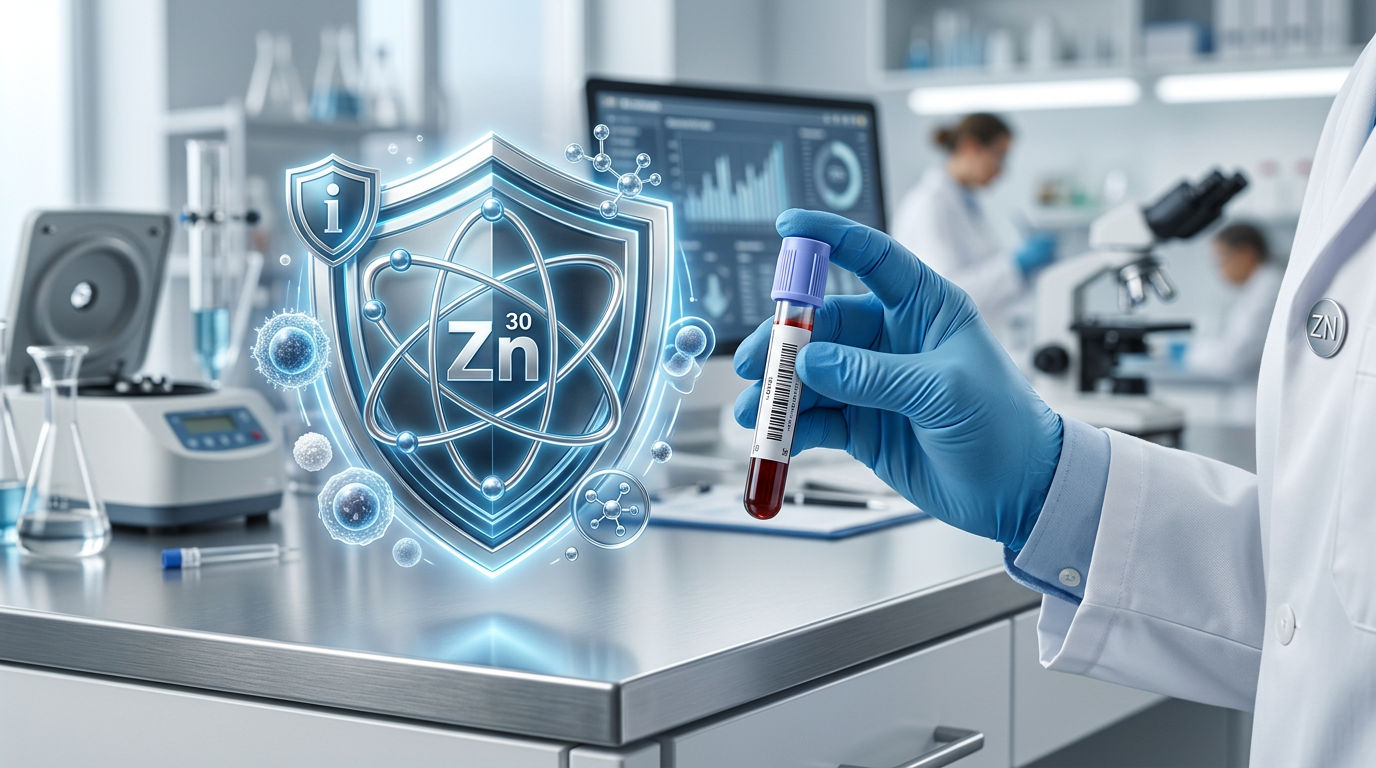
Zinc deficiency can affect immunity and healing; it is not a diagnosis on its own.
Educational guide only — not medical advice. Always review results with a qualified clinician.
6 min read
··Last updated
NNoryaAI
Zinc blood test: what your result means
Zinc is an essential trace mineral that participates in more than 300 enzymatic reactions in the body. It is vital for immune function, wound healing, protein synthesis, DNA formation, and normal growth and development. Despite its importance, zinc deficiency is surprisingly common—the World Health Organization estimates that roughly one-third of the global population is at risk.
When your blood test reports a zinc level, it measures the concentration of zinc in your serum or plasma. A low value can affect immunity, skin health, taste perception, and more. This guide explains what the number means and when to take action.
This article is educational and does not replace medical advice. Always discuss your lab results with a qualified healthcare professional.
What is zinc and why does it matter?
Zinc (Zn) is the second most abundant trace element in the body after iron. It is found in every cell and is essential for the function of over 300 enzymes that drive metabolism, digestion, nerve function, and many other processes. Unlike iron, the body has no specialized zinc storage system, so a continuous dietary supply is necessary.
Key roles of zinc include:
Immune defence – zinc is required for the development and function of neutrophils, natural killer cells, and T lymphocytes. Deficiency impairs both innate and adaptive immunity.
Wound healing – zinc supports collagen synthesis and cell proliferation in damaged tissue.
Taste and smell – the enzyme gustin, which is zinc-dependent, is essential for normal taste perception.
Growth and development – adequate zinc is critical for childhood growth, puberty, and pregnancy.
Skin and hair health – zinc deficiency is a recognized cause of dermatitis, hair loss, and nail abnormalities.
The body contains approximately 2–3 grams of zinc, distributed across muscle (60%), bone (30%), skin and liver (5%), and the remaining 5% in other tissues. Only about 0.1% of total body zinc is in the blood, which is why serum zinc is an imperfect—but clinically useful—marker of zinc status.
Normal zinc ranges
Zinc is most commonly measured in serum or plasma. Reference ranges differ slightly between laboratories:
Marker
Normal range
Serum zinc (adults)
60–120 µg/dL (9.2–18.4 µmol/L)
Zinc levels are affected by time of day (lower in the afternoon), recent meals, inflammation, and certain medications. A morning fasting sample provides the most reliable result. During acute illness or inflammation, serum zinc can drop temporarily even when stores are adequate, because zinc redistributes to the liver as part of the acute-phase response.
Causes of low and high zinc
Low zinc (deficiency) is caused by:
Inadequate dietary intake – diets low in meat, shellfish, legumes, and seeds. Vegetarian and vegan diets carry higher risk because phytates in grains and legumes inhibit zinc absorption.
Malabsorption – celiac disease, Crohn’s disease, short bowel syndrome, and chronic diarrhea reduce zinc absorption in the gut.
Chronic kidney disease – urinary losses and reduced intestinal absorption.
Pregnancy and lactation – increased demand for fetal/infant growth.
Alcoholism – ethanol reduces zinc absorption and increases urinary excretion.
Medications – diuretics, ACE inhibitors, and long-term proton pump inhibitors can lower zinc.
High zinc (excess) is uncommon and usually results from excessive supplementation. Chronic zinc excess (>150 mg/day) can cause copper deficiency, because zinc and copper compete for absorption. Symptoms of zinc excess include nausea, vomiting, and diarrhea.
Symptoms of zinc deficiency
Zinc deficiency manifests across multiple organ systems because of zinc’s wide-ranging roles:
Hair loss (alopecia) – thinning hair or diffuse hair loss, sometimes with dull, brittle strands.
Poor wound healing – cuts and scrapes take longer to heal.
Changes in taste and smell – decreased ability to taste food (hypogeusia) or altered taste (dysgeusia).
Skin rashes – acrodermatitis enteropathica (a classic zinc-deficiency dermatitis) presents as scaly, red lesions around the mouth, hands, and feet.
Growth retardation – in children, zinc deficiency can stunt linear growth and delay puberty.
Night blindness – zinc is needed for retinol (vitamin A) metabolism.
Mood disturbances – irritability, depression, and impaired cognitive function have been linked to low zinc.
Severe zinc deficiency is rare in developed countries but mild-to-moderate deficiency is common, especially in the elderly, pregnant women, vegetarians, and individuals with chronic GI diseases.
Related tests
Zinc is often interpreted alongside other markers:
Copper – zinc and copper compete for absorption; high zinc supplements can cause copper deficiency and vice versa. Both should be checked if either is abnormal.
Albumin – zinc circulates bound to albumin; low albumin (e.g. in liver disease or malnutrition) can reduce serum zinc even when true stores are adequate.
Complete Blood Count (CBC) – zinc deficiency can cause lymphopenia and impaired neutrophil function.
Iron studies (ferritin, serum iron, TIBC) – zinc and iron deficiency often coexist in malnutrition or malabsorption. See our iron & ferritin guide.
Alkaline phosphatase (ALP) – ALP is a zinc-dependent enzyme; low ALP may indicate zinc deficiency.
When to see a doctor
You should discuss your zinc result with a healthcare provider if:
Your serum zinc is below 60 µg/dL.
You have symptoms consistent with zinc deficiency: frequent infections, hair loss, poor wound healing, or changes in taste/smell.
You follow a vegetarian or vegan diet and have not been monitoring zinc intake.
You have a chronic condition that impairs absorption (celiac, Crohn’s, liver disease, kidney disease).
You are pregnant or breastfeeding.
You take high-dose zinc supplements—your doctor should monitor for copper deficiency.
Your doctor can confirm deficiency, identify the underlying cause, recommend appropriate supplementation (typically 15–30 mg/day of elemental zinc for mild deficiency), and monitor your response.
How NoryaAI helps you understand your zinc results
NoryaAI makes it easy to understand your zinc and other blood test results. Simply upload your lab report—whether it is a PDF, photo, or scan—and our AI engine will:
Extract your zinc value along with all other biomarkers on the report.
Compare each result against age- and sex-specific reference ranges.
Flag abnormal values with clear, plain-language explanations.
Highlight connections between related markers (e.g. zinc + copper + albumin + iron studies).
Generate a structured, doctor-ready summary you can share at your next appointment.
Explore our pricing plans to see which option fits your needs. NoryaAI is designed to help you prepare for—not replace—a conversation with your doctor.
Medical disclaimer
This article is for informational and educational purposes only. It does not constitute medical advice, diagnosis, or treatment. Always consult a qualified healthcare professional before making any decisions based on your lab results. NoryaAI provides automated analysis to help you understand your reports, but it is not a substitute for professional medical judgment.
Trust & review
How this guide should be used
This article is educational and should be reviewed alongside our medical review, methodology, and transparency pages. Use it to prepare for a clinician conversation, not as a diagnosis.