High or Low TSH Meaning: Thyroid Blood Test Explained
What TSH is, what high or low TSH means, how it relates to Free T4 and Free T3, and when to follow up with a clinician.
Educational guide only — not medical advice. Always review results with a qualified clinician.
12 min read
··Last updated
NNoryaAI
What TSH is
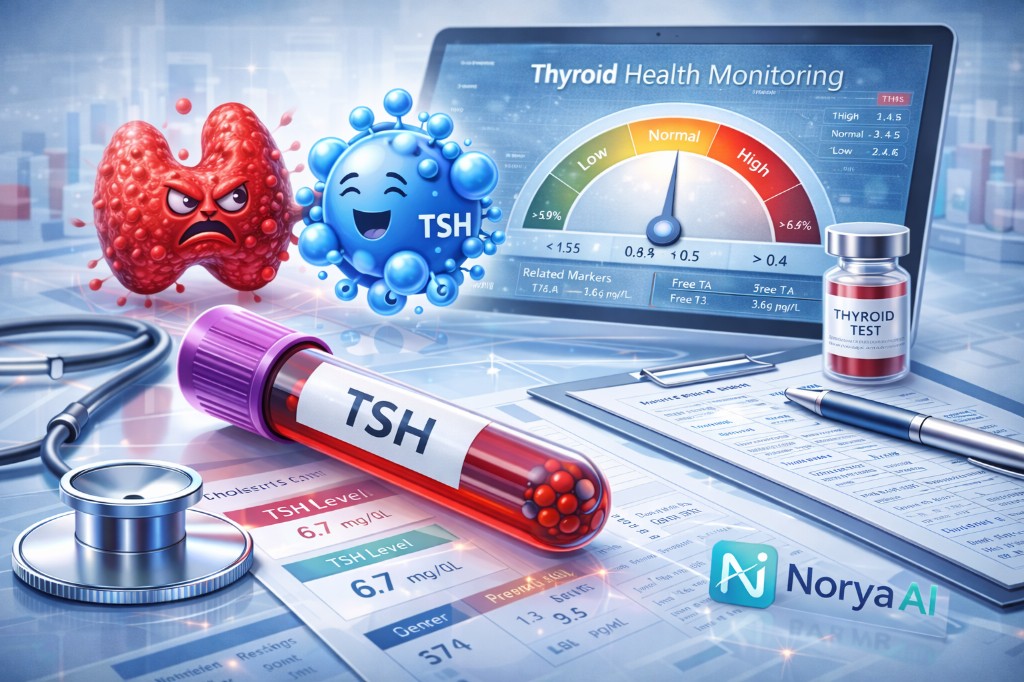
TSH (thyroid-stimulating hormone) is produced by the pituitary gland and acts as the main "signal" to the thyroid to make and release thyroid hormones (T4 and T3). When thyroid hormone levels are low, the pituitary releases more TSH; when high, TSH falls. TSH reflects the brain's attempt to keep thyroid hormone in the right range. It is one of the most common blood tests for thyroid function. Interpretation and diagnosis are for your clinician.
TSH + Free T4 + Free T3 together
TSH is usually interpreted with Free T4 (FT4) and often Free T3 (FT3). Typical patterns: High TSH + low FT4 → primary hypothyroidism. Low TSH + high FT4/FT3 → hyperthyroidism. High TSH, FT4 normal → subclinical hypothyroidism; Low TSH, FT4/FT3 normal → subclinical hyperthyroidism or non-thyroid illness. Borderline results should be discussed with your doctor.
Typical reference ranges
Reference ranges vary by laboratory and method. Many labs use TSH around 0.4–4.0 mU/L. In pregnancy, different (often stricter) TSH targets are used—your obstetrician or endocrinologist will advise. Do not self-interpret.
Symptoms (non-specific)
Possible hypothyroid symptoms: fatigue, weight gain, cold intolerance, constipation, dry skin. Possible hyperthyroid symptoms: palpitations, weight loss, heat intolerance, tremor, anxiety. All non-specific; discuss with your doctor.
Common causes
Common causes: Hashimoto's (autoimmune hypothyroidism), Graves' (autoimmune hyperthyroidism), thyroiditis, iodine deficiency or excess, medications (e.g. amiodarone, lithium), recent severe illness. Your doctor will consider history, antibodies (TPOAb, TgAb, TRAb), and sometimes imaging.
When to contact a clinician
See a doctor if: TSH very abnormal or changing quickly; pregnancy with thyroid concerns; heart symptoms; severe fatigue; rapid weight change or neck swelling (goiter); or known thyroid disease with changed symptoms. This article does not replace clinical assessment.
Next tests a clinician may consider
Your doctor may order: TPOAb, TgAb (Hashimoto's), TRAb (Graves'), thyroid ultrasound, repeat TSH/FT4/FT3, or ferritin/B12/vitamin D if relevant. Which tests are needed is a clinical decision.
Practical tips
Medication timing: If you take thyroid hormone (e.g. levothyroxine), take it as prescribed. Blood draws are often before the morning dose. Do not change or stop your dose on your own—any adjustment should be clinician-directed.
Frequently asked questions
See FAQ above; interpretation is for your clinician.
Medical disclaimer
This content is for information only and does not constitute medical advice, diagnosis, or treatment. Always discuss your results and symptoms with a qualified healthcare provider.
Trust & review
How this guide should be used
This article is educational and should be reviewed alongside our medical review, methodology, and transparency pages. Use it to prepare for a clinician conversation, not as a diagnosis.