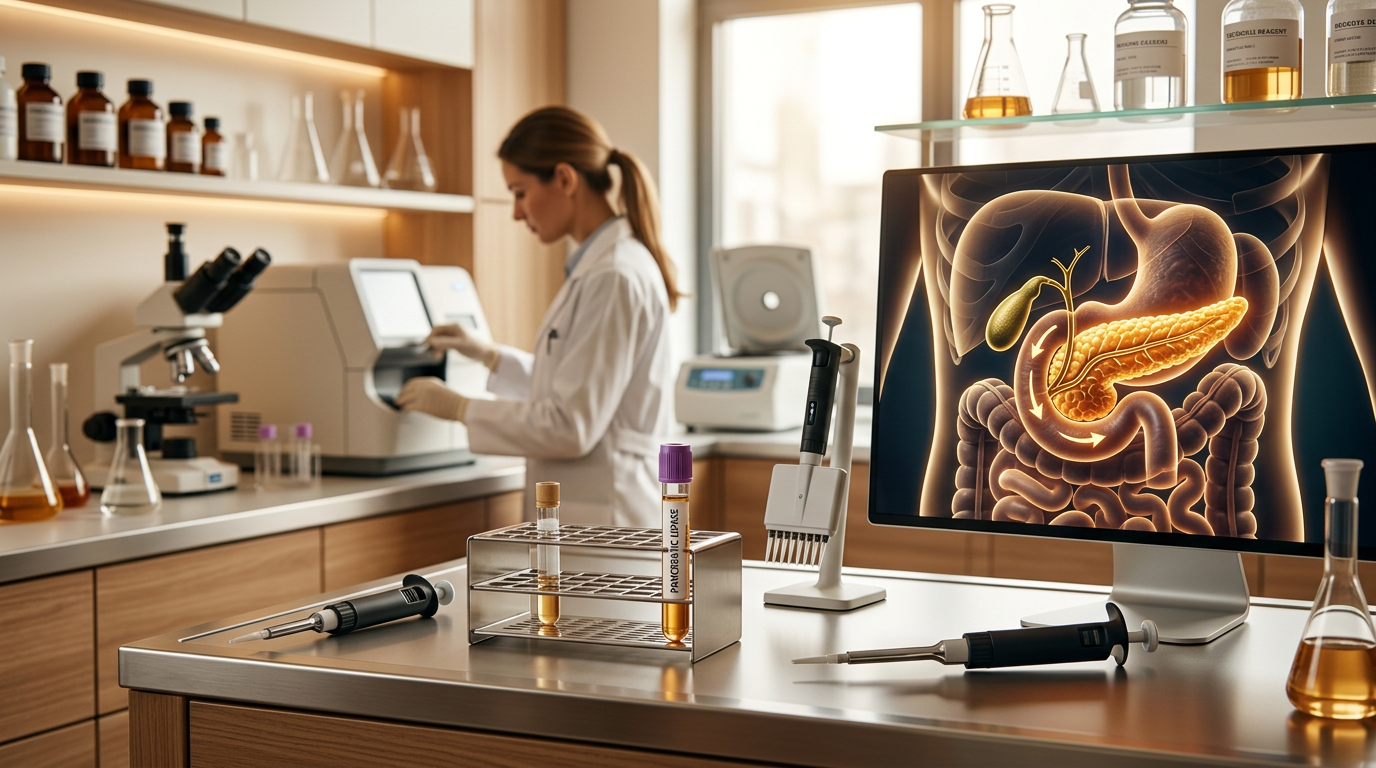
High lipase may indicate pancreatic issues; it is not a diagnosis on its own.
Educational guide only — not medical advice. Always review results with a qualified clinician.
6 min read
··Last updated
NNoryaAI
Lipase blood test: what your results mean
If your lab report shows an elevated lipase level, you may be wondering what this enzyme does and whether you should be worried. Lipase is a digestive enzyme produced primarily by the pancreas, and a high lipase result is one of the most important clues to pancreatic disease, particularly acute pancreatitis.
This guide explains what a lipase blood test measures, normal reference ranges, causes of elevated lipase, symptoms of pancreatitis, and when to seek medical attention. Our goal is not to diagnose — it is to help you understand your results so you can have a more productive conversation with your doctor.
Lipase is more specific for pancreatic disease than amylase, the other commonly tested pancreatic enzyme. A lipase level more than three times the upper limit of normal is clinically very significant and warrants urgent evaluation.
What is lipase?
Lipase is a hydrolase enzyme that breaks down triglycerides (fats) into fatty acids and glycerol. It is produced mainly by the pancreas, although smaller amounts are also secreted by the stomach, tongue, liver, and intestinal mucosa. Pancreatic lipase is the single most important enzyme for dietary fat digestion.
The pancreas releases lipase in an inactive precursor form called prolipase, which is activated in the duodenum by colipase and bile salts. Without active lipase, fat digestion is severely impaired, leading to malabsorption and steatorrhea (fatty stools).
In healthy individuals, only small amounts of lipase circulate in the blood. When the pancreas is damaged or its duct is obstructed, lipase leaks into the bloodstream and serum levels rise. This is why the lipase test is one of the most valuable laboratory tools for diagnosing pancreatic disease.
Normal lipase levels (reference ranges)
Lipase is measured with a simple blood draw. The table below summarises the commonly accepted reference range:
Status
Lipase (U/L)
Normal
0 – 60
Pancreatitis threshold (3× upper limit)
> 180
The normal serum lipase range is generally 0–60 U/L, although exact cut-offs may vary between laboratories. For the diagnosis of acute pancreatitis, a lipase level at least three times the upper limit of normal (typically >180 U/L) is used as a clinical criterion.
Lipase is minimally affected by food intake, so fasting is not strictly required before the test, though some laboratories recommend an 8–12-hour fast. Always compare your result with your own laboratory’s reference range.
Causes of high lipase
An elevated serum lipase can result from several conditions. The most common are:
Acute pancreatitis: By far the most important cause. Lipase typically rises to more than three times the upper limit of normal. The two leading triggers are gallstones and alcohol use.
Chronic pancreatitis: Ongoing pancreatic damage may cause mild to moderate lipase elevations, although in advanced disease the gland may be so destroyed that lipase is paradoxically low.
Gallstones (cholelithiasis): Stones blocking the common bile duct can obstruct the pancreatic duct, causing lipase to rise.
Pancreatic cancer: Tumours may obstruct the duct or damage tissue, leading to enzyme leakage.
Kidney disease: Because lipase is cleared by the kidneys, impaired renal function can elevate serum levels.
Bowel obstruction: Ileus or mechanical obstruction may cause a mild lipase increase.
Medications: Opioids, thiazide diuretics, and valproic acid, among others, can trigger pancreatitis or directly raise lipase.
Lipase is more specific for pancreatic disease than amylase. Amylase can be elevated by salivary-gland disorders and other non-pancreatic sources, whereas lipase elevation points more strongly to the pancreas. For more on liver enzymes that are often assessed alongside lipase, see our ALT & AST guide.
Symptoms of pancreatitis
Because acute pancreatitis is the most common reason for a significantly elevated lipase, here are its hallmark symptoms:
Severe upper abdominal pain: Typically starts suddenly in the epigastric area and radiates to the back. It may worsen after eating and improve when leaning forward.
Nausea and vomiting: Frequently accompany the pain and can lead to dehydration.
Fever: May develop due to inflammation or secondary infection.
Abdominal tenderness and distension: The abdomen may be tender to touch with visible bloating.
Rapid pulse: Tachycardia can result from severe pain and dehydration.
In chronic pancreatitis, symptoms include recurring abdominal pain, weight loss, fatty stools (steatorrhea), and the development of diabetes. Symptoms vary among individuals; a mildly elevated lipase may sometimes be completely asymptomatic.
Acute pancreatitis is a medical emergency — if you experience the symptoms above, seek medical attention immediately.
Related tests
When lipase is elevated, additional tests help identify the cause and assess the pancreas:
Amylase: Often ordered alongside lipase for pancreatitis evaluation, though lipase is more specific.
ALT and AST: Elevated liver enzymes raise suspicion for gallstone-induced pancreatitis. Learn more in our ALT & AST guide.
GGT and bilirubin: Used to evaluate bile-duct obstruction.
Abdominal ultrasound: First-line imaging to detect gallstones and assess pancreatic morphology.
Abdominal CT scan: The gold standard for grading pancreatitis severity, detecting necrosis, and evaluating complications.
Triglycerides: Very high triglyceride levels (>1,000 mg/dL) can trigger pancreatitis.
Evaluating these tests together is essential for accurate diagnosis and treatment planning.
When should you see a doctor?
Seek urgent medical attention — including the emergency department — if:
You have severe, persistent upper abdominal pain (especially if radiating to the back)
You experience uncontrollable nausea and vomiting
You develop a high fever and feel generally unwell
Your blood test shows lipase more than three times the upper limit of normal
You have a known history of gallstones with accompanying symptoms
Acute pancreatitis is a potentially life-threatening condition that requires hospital-based treatment. Early intervention significantly reduces the risk of complications. Treatment typically involves intravenous fluids, pain management, and potentially interventional procedures.
A mild lipase elevation (1–3 times normal) is not always an emergency but should still be discussed with your doctor to identify the underlying cause.
How NoryaAI helps you understand lipase results
NoryaAI analyses your full blood-test report — including lipase — in the context of your age, sex, and clinical background. Our AI-powered system highlights out-of-range values, summarises possible causes, and suggests questions you may want to ask your doctor.
Ready to get started? Upload your lab report for an instant analysis. Visit our pricing page to explore plan options. NoryaAI does not replace a physician; our goal is to empower you with information so your next medical consultation is more productive.
If your lipase is elevated, do not panic — but if you are experiencing abdominal pain or other symptoms of pancreatitis, seek prompt medical evaluation.
Disclaimer
This content is for informational purposes only and does not constitute medical advice, diagnosis, or treatment. Always discuss your blood-test results with a qualified healthcare professional. NoryaAI is not a substitute for a medical consultation. Make all health-related decisions in consultation with your doctor. Visit our analysis page for preliminary insights into your results.
Trust & review
How this guide should be used
This article is educational and should be reviewed alongside our medical review, methodology, and transparency pages. Use it to prepare for a clinician conversation, not as a diagnosis.