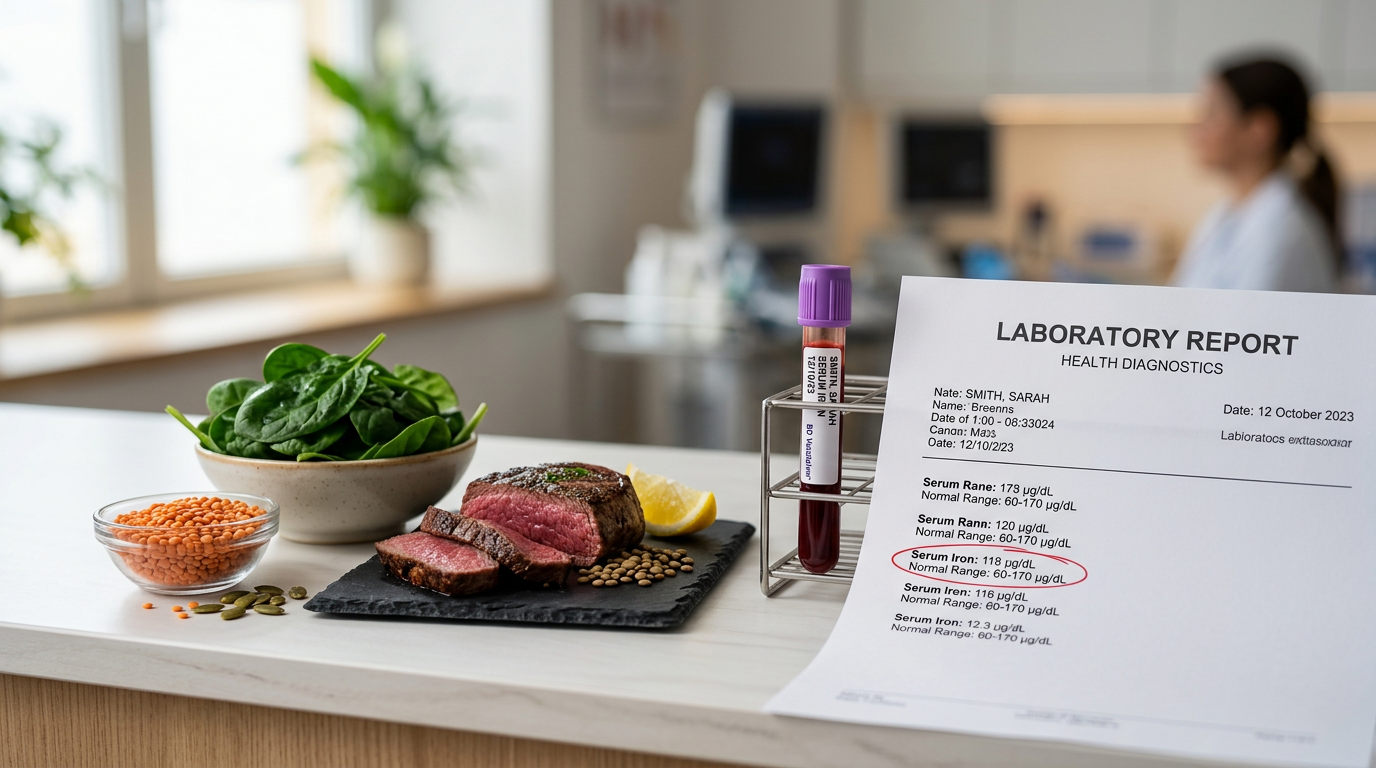
Serum iron reflects your body's iron status; low or high alone is not a diagnosis.
Educational guide only — not medical advice. Always review results with a qualified clinician.
8 min read
··Last updated
NNoryaAI
Serum iron blood test: what low or high results mean
A serum iron test is one of the key markers doctors order when evaluating iron status, anemia, or unexplained fatigue. Whether your result comes back flagged as low or high, it naturally raises questions: should I worry? The answer depends on the full clinical picture — serum iron alone is a snapshot, not a diagnosis.
This guide explains what serum iron measures, how iron is metabolised, what the reference ranges mean, and when you should consult a healthcare professional. It is educational, not diagnostic — always discuss your results with a doctor.
What is a serum iron test?
A serum iron test measures the amount of iron circulating in your blood that is bound to the transport protein transferrin. Only a small fraction of total body iron is found in serum; the majority is incorporated into hemoglobin inside red blood cells or stored as ferritin in the liver, spleen, and bone marrow.
Results are typically reported in μg/dL (micrograms per decilitre). Serum iron levels fluctuate throughout the day — they tend to be highest in the morning and lowest in the evening — and can be influenced by recent meals. For this reason, the test is usually drawn in the morning after an overnight fast.
Serum iron is most useful when interpreted alongside related markers such as ferritin, TIBC (total iron-binding capacity), and transferrin saturation, which together paint a more complete picture of iron metabolism.
How iron metabolism works
Iron is absorbed primarily in the duodenum (the first part of the small intestine). Heme iron from animal sources is absorbed far more efficiently than non-heme iron from plant-based foods. Once absorbed, iron enters the bloodstream and binds to transferrin, the main iron-transport protein, which delivers it to tissues that need it — above all the bone marrow, where it is incorporated into hemoglobin.
Surplus iron is stored as ferritin in the liver, spleen, and bone marrow. The body has no active excretion pathway for iron; losses occur mainly through shed intestinal cells, menstruation, and minor bleeding. Iron balance is therefore regulated at the point of absorption by hepcidin, a hormone produced by the liver. When iron stores are adequate or inflammation is present, hepcidin rises and blocks further absorption; when stores are low, hepcidin falls and absorption increases.
Beyond hemoglobin, iron is essential for myoglobin (muscle oxygen storage), cytochrome enzymes (energy production), and DNA synthesis. Both deficiency and overload can have serious health consequences.
Normal ranges for iron parameters
Reference ranges vary slightly between laboratories. The table below summarises widely accepted values. Always compare your result against the specific range printed on your lab report.
Parameter
Men
Women
Serum Iron
65–175 μg/dL
50–170 μg/dL
TIBC
250–370 μg/dL
250–370 μg/dL
Transferrin Saturation
20–50%
15–50%
Ferritin
20–250 ng/mL
10–120 ng/mL
A single result slightly outside the range is not always cause for concern. Diurnal variation, recent meals, hydration status, and stress can all affect serum iron. Your doctor will interpret the result in the context of your symptoms and other laboratory findings.
Causes of low serum iron
Iron deficiency is the most common nutritional deficiency worldwide and the leading cause of anemia. Low serum iron can result from:
Iron deficiency anemia — insufficient dietary intake or increased demand that outpaces supply
Blood loss — heavy menstruation, gastrointestinal bleeding (ulcers, polyps, colon cancer), frequent blood donation
Malabsorption — celiac disease, inflammatory bowel disease (IBD), gastric bypass surgery can impair iron uptake
Pregnancy — expanded blood volume and fetal demands increase iron requirements substantially
Chronic disease anemia — inflammation raises hepcidin, trapping iron in storage and lowering serum levels
Serum iron alone is not sufficient to diagnose iron deficiency. Your doctor will evaluate ferritin, TIBC, and transferrin saturation together to confirm the diagnosis and identify the underlying cause.
Causes of high serum iron
Elevated serum iron also warrants medical attention. Common causes include:
Hereditary hemochromatosis — a genetic disorder causing excessive iron absorption from the gut; if untreated, iron accumulates in the liver, heart, and pancreas, leading to organ damage
Excessive iron supplementation — taking high-dose iron tablets without medical supervision
Hemolytic anemia — premature destruction of red blood cells releases iron back into the bloodstream
Liver disease — hepatitis or cirrhosis can elevate both ferritin and serum iron
Multiple blood transfusions — each unit of transfused blood adds approximately 200–250 mg of iron
Iron poisoning — accidental ingestion of large doses, particularly dangerous in children
Chronic iron overload leads to iron deposition in organs, a condition known as hemosiderosis. Early detection through routine blood work and genetic screening (for hemochromatosis) is critical to prevent irreversible organ damage.
Iron vs. ferritin: what is the difference?
Serum iron is a snapshot of the iron currently circulating in the blood, bound to transferrin. It fluctuates significantly throughout the day — higher in the morning, lower in the evening — and is affected by recent food intake. Because of this variability, a single measurement has limited reliability on its own.
Ferritin reflects the body's iron stores and is a much more stable marker. Low ferritin is nearly definitive evidence that iron stores are depleted. However, ferritin is also an acute-phase reactant, meaning it rises during inflammation, infection, and liver disease — potentially masking underlying iron deficiency.
For a complete assessment of iron status, both tests should be interpreted together, ideally alongside TIBC and transferrin saturation. This combination allows your doctor to distinguish between iron deficiency anemia, chronic disease anemia, and iron overload conditions.
TIBC and transferrin saturation explained
TIBC (Total Iron-Binding Capacity) measures the maximum amount of iron that transferrin in the blood can carry. In iron deficiency, the body produces more transferrin to capture every available iron atom, so TIBC rises. In iron overload or chronic disease, transferrin production decreases and TIBC falls.
Transferrin saturation is calculated as: (Serum Iron ÷ TIBC) × 100. In healthy individuals it typically ranges from 20% to 50%. A saturation below 20% suggests iron deficiency; above 50% raises concern for iron overload, particularly hemochromatosis.
When evaluated alongside serum iron and ferritin, these markers form a powerful diagnostic panel. For example: low serum iron + high TIBC + low ferritin = iron deficiency anemia; low serum iron + low TIBC + normal or elevated ferritin = anemia of chronic disease.
Symptoms of low and high iron
Low iron symptoms: Fatigue, pallor, shortness of breath on exertion, brittle nails, cold hands and feet, dizziness, headache, and pica (craving non-food items such as ice or clay) are hallmark signs of iron deficiency. In severe cases, tachycardia, chest pain, and restless legs syndrome may develop.
High iron symptoms: Joint pain (especially in the hands), chronic fatigue, abdominal pain, skin bronzing (a grayish-brown discolouration), liver enlargement, and impaired liver function can signal iron overload. Untreated hemochromatosis may progress to diabetes, cardiomyopathy, and cirrhosis.
Symptoms in both directions tend to develop gradually, making them easy to overlook. Regular blood testing — especially for those with a family history of iron disorders — is the most reliable way to catch problems early.
When to see a doctor
You should consult a healthcare professional if your serum iron falls outside the reference range. Seek timely medical evaluation especially if:
You experience unexplained fatigue, pallor, or shortness of breath
There is a family history of hemochromatosis or iron disorders
You have heavy menstrual periods or suspected gastrointestinal bleeding
Your ferritin is very low or very high
Transferrin saturation is below 20% or above 50%
Your doctor may order additional tests — complete blood count, peripheral smear, B12 and folate levels, genetic testing for HFE mutations — to identify the underlying cause. Early diagnosis and treatment are essential to prevent complications such as organ damage or severe anemia.
How Norya can help
Understanding blood test results can sometimes be overwhelming. Norya lets you upload your blood test report and receive a structured, easy-to-understand health summary in minutes. Your results are compared against reference ranges and explained in plain language.
Norya is not a diagnostic tool — its purpose is to prepare you for a more informed conversation with your doctor. Start your analysis with Norya and discover what your results mean. For pricing details, visit our pricing page.
Disclaimer
This guide is for informational purposes only and does not replace medical advice or diagnosis. Always discuss your results with a healthcare professional. Start analysis with Norya
Trust & review
How this guide should be used
This article is educational and should be reviewed alongside our medical review, methodology, and transparency pages. Use it to prepare for a clinician conversation, not as a diagnosis.