HbA1c Explained: How to Interpret Prediabetes and Diabetes Ranges
What HbA1c measures, typical diagnostic ranges, eAG, factors that can skew results, and when to follow up with a clinician.
Educational guide only — not medical advice. Always review results with a qualified clinician.
11 min read
··Last updated
NNoryaAI
What HbA1c measures
HbA1c (glycated haemoglobin A1c) is a form of haemoglobin that has glucose attached to it. It reflects your average blood glucose over roughly 2–3 months, because red blood cells live about that long. The more glucose in your blood over that period, the higher the proportion of haemoglobin that becomes glycated. Laboratories report HbA1c as a percentage (e.g. 5.6%) or in mmol/mol in some countries. This test is widely used to screen for and monitor diabetes and prediabetes, and to guide treatment. It does not replace a clinical diagnosis; interpretation and any treatment decisions are made by your doctor.
Typical diagnostic ranges
Reference and diagnostic cut-offs vary by laboratory and guideline. The following are commonly used for context only; your lab and clinician use the criteria that apply to your situation. In many guidelines:
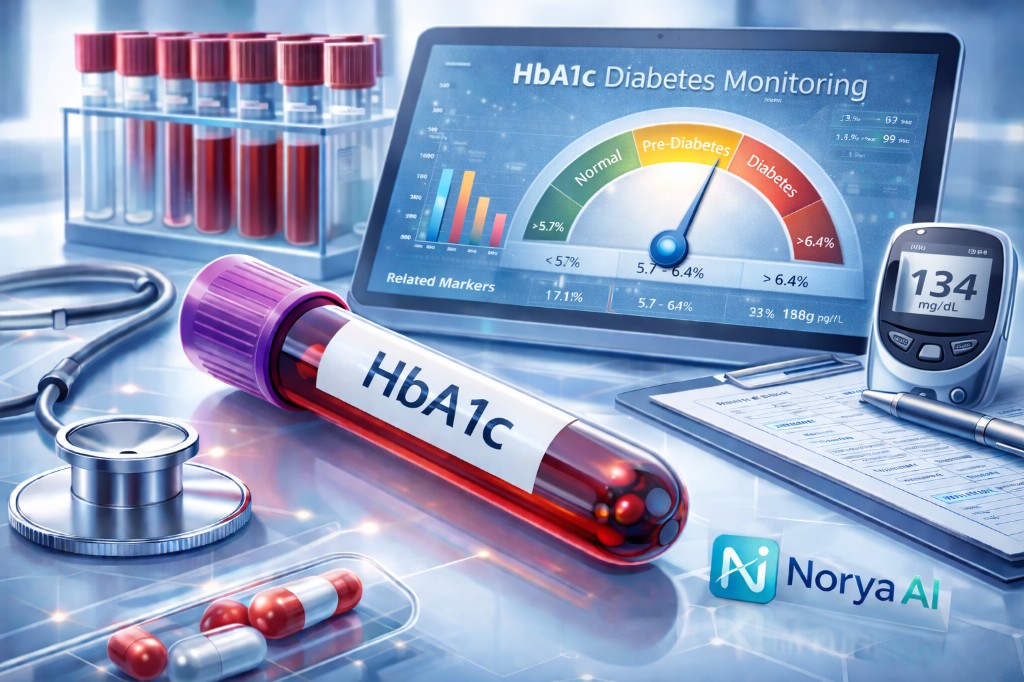
Normal: below 5.7% (often <5.7%).
Prediabetes: 5.7–6.4%.
Diabetes: 6.5% or above (≥6.5%).
These ranges are for general information. The final classification (normal, prediabetes, or diabetes) is a clinical and laboratory decision made by your doctor using your result, your history, and sometimes repeat or additional tests. Do not self-diagnose; discuss your result with a clinician.
HbA1c vs fasting glucose vs OGTT
Different tests give different information:
Test
What it reflects
HbA1c
Average glucose over ~2–3 months; no fasting needed for HbA1c itself.
Fasting glucose
Blood sugar at a single time after fasting (often 8+ hours).
OGTT (oral glucose tolerance)
Glucose before and after a standard glucose drink; used in some diagnostic and pregnancy protocols.
Your doctor may use one or more of these, depending on the clinical situation and local guidelines.
Estimated Average Glucose (eAG)
Some labs or reports show an Estimated Average Glucose (eAG) next to your HbA1c. This is a calculated estimate of what your average blood glucose might have been (e.g. in mg/dL or mmol/L) over the period that HbA1c reflects. It is not a precise measurement and is meant only to help you relate the percentage to everyday glucose units. Do not use it as the sole basis for treatment; your clinician will interpret your actual HbA1c and other results in context.
What can skew HbA1c
Several conditions can make HbA1c less reliable or harder to interpret:
Anaemia / iron deficiency: Can alter red cell turnover and haemoglobin, affecting HbA1c.
Haemoglobin variants: Some genetic variants (e.g. sickle cell trait, thalassaemia) can interfere with certain HbA1c methods.
Pregnancy: Guidelines may prefer other tests (e.g. fasting glucose, OGTT) for screening or diagnosis in pregnancy.
Kidney disease: Can affect red cell life span and haemoglobin; interpretation may need adjustment.
Recent blood loss or transfusion: Can change the mix of red cells and thus HbA1c.
Other: Severe liver disease, some medications, or recent major illness can sometimes influence results.
If any of these apply to you, your clinician will take them into account when interpreting your HbA1c.
When to follow up with a clinician
You should see a doctor or nurse for interpretation and next steps if:
Your HbA1c is 6.5% or above (or in a range your lab flags as diabetes).
Your HbA1c has risen quickly or is in the prediabetes range and you have risk factors or symptoms.
You have symptoms such as unusual thirst, frequent urination, unexplained weight loss, fatigue, or blurred vision.
You are pregnant or planning pregnancy and have questions about glucose or diabetes screening.
You have conditions that can skew HbA1c (e.g. anaemia, haemoglobin variant) and need guidance on which tests to use.
This article is for information only; it does not replace a clinical assessment. Always discuss your results and symptoms with a healthcare provider.
Next steps a clinician may consider
Depending on your result and history, your doctor may:
Repeat the HbA1c or order fasting glucose or an OGTT to confirm or clarify.
Check lipids, kidney function (e.g. creatinine, eGFR), and urine albumin as part of cardiovascular and kidney risk assessment.
Monitor blood pressure and advise on lifestyle (diet, activity, weight, sleep) and, if needed, medication.
Which tests and treatments are chosen is a clinical decision made with you by your doctor.
Practical lifestyle overview
General principles that often support metabolic health (and are not a substitute for medical advice):
Diet: Balanced meals, plenty of vegetables and fibre, limited added sugars and highly processed foods; portion awareness. No specific “diabetes diet” is required for everyone—your doctor or dietitian can tailor advice.
Activity: Regular physical activity (e.g. 150 minutes per week of moderate exercise, or as advised for you) can help improve glucose and overall health.
Sleep: Adequate, regular sleep supports metabolism and well-being.
Weight: If your doctor has recommended weight management, gradual, sustained changes are usually more effective than short-term diets. This is general guidance only; no medication or supplement is recommended here—your clinician will advise on any treatment.
Frequently asked questions
How fast can HbA1c change?
HbA1c reflects average glucose over about 2–3 months. Meaningful change usually takes at least several weeks of sustained difference in blood sugar. Your clinician can advise when to repeat the test.
Is an HbA1c of 5.8% bad?
5.8% falls in the prediabetes range (5.7–6.4%). It does not mean you have diabetes, but it suggests higher risk and that lifestyle measures and possibly repeat testing or further assessment may be recommended. Interpretation is for your doctor.
Why might my HbA1c be high but fasting glucose normal?
HbA1c reflects 2–3 months of glucose; fasting glucose is a single snapshot. Post-meal or overnight glucose can be elevated while fasting stays normal. Certain conditions (e.g. anemia, hemoglobin variants) can also affect HbA1c. Your doctor can help explain your pattern.
What about anemia and HbA1c?
Iron deficiency, B12 or folate deficiency, and other causes of anemia can skew HbA1c (often lowering it). Hemoglobin variants can also affect results. If you have known or suspected anemia, your clinician will take this into account when interpreting HbA1c.
Do I need to fast for HbA1c?
HbA1c can usually be measured non-fasting. If the same blood draw is used for fasting glucose or lipids, your lab will ask you to fast; follow the instructions given for your test.
What is a normal HbA1c?
In general guidelines, below 5.7% is often considered in the normal (non-diabetic) range. Exact cut-offs and reference ranges vary by lab and guideline; your clinician interprets your result in context.
Medical disclaimer
This content is for information only and does not constitute medical advice, diagnosis, or treatment. Always discuss your results and any symptoms with a qualified healthcare provider. Do not start or change diet, exercise, or medication based solely on this article. If you have concerns about your health, seek professional medical care.
Trust & review
How this guide should be used
This article is educational and should be reviewed alongside our medical review, methodology, and transparency pages. Use it to prepare for a clinician conversation, not as a diagnosis.