Low Ferritin Meaning: What Low or High Ferritin Levels May Indicate
A clear guide to ferritin, iron stores, reference ranges, common causes of low or high results, and when to see a doctor.
Educational guide only — not medical advice. Always review results with a qualified clinician.
10 min read
··Last updated
NNoryaAI
What is ferritin?
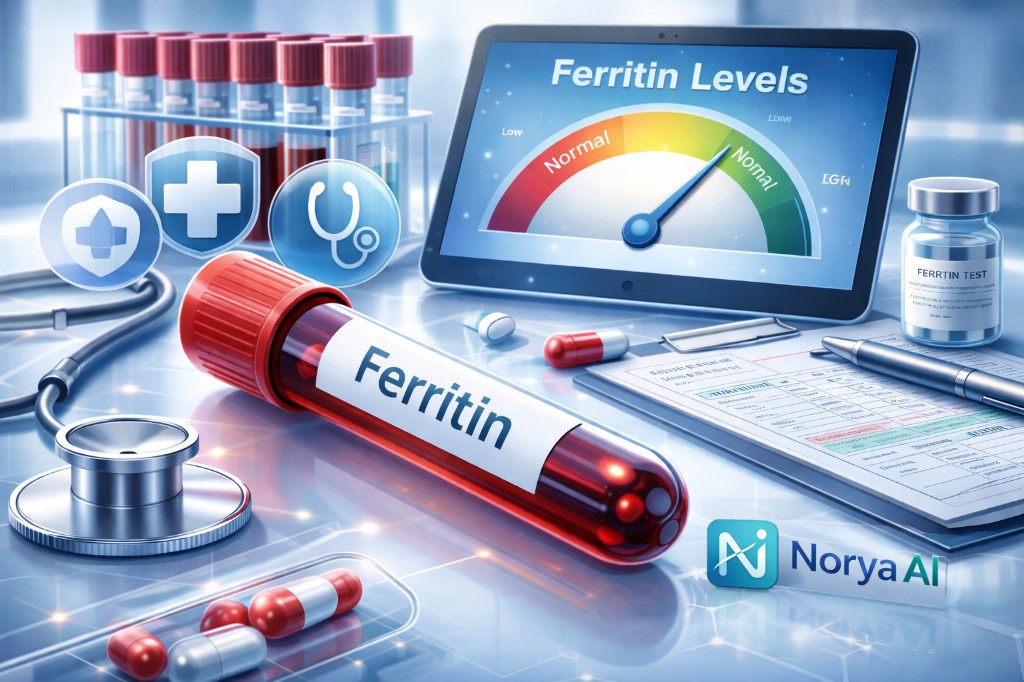
Ferritin is a protein that stores iron and releases it in a controlled way when the body needs it. Measured in blood, ferritin is the most practical indicator of your body’s iron stores. It is not the same as “serum iron” (the iron circulating in the blood at the moment of the test), which can vary with meals and time of day.
Low ferritin usually suggests depleted iron stores and may point to iron deficiency if other causes are ruled out. High ferritin can reflect excess iron storage, but it is also an acute-phase reactant: it often rises with inflammation, infection, or liver conditions, so a high value does not automatically mean too much iron. Interpretation should always be done together with your doctor and, when needed, additional tests.
Ferritin vs iron vs transferrin vs TSAT
These tests are often ordered together to assess iron status. A short overview:
Test
What it reflects
Ferritin
Iron stores (storage form). Best single marker for deficiency.
Serum iron
Iron in circulation at time of draw. Varies with diet and time of day.
Transferrin / TIBC
Iron-carrying capacity. Often high when stores are low.
TSAT
Transferrin saturation. Low in deficiency; very high may suggest overload.
Low ferritin: causes and symptoms
Common causes of low ferritin include: blood loss (heavy periods, digestive bleeding, surgery), low dietary intake or poor absorption (e.g. coeliac disease, gastric surgery), increased needs (pregnancy, growth, intense training), and chronic inflammation affecting absorption. More than one factor can apply at once.
Common symptoms that may be associated with low iron stores include fatigue, weakness, pale skin, shortness of breath on exertion, dizziness, cold hands and feet, brittle nails, and hair loss. These are non-specific: they can have many other causes. Symptoms alone do not establish a diagnosis; they must be interpreted together with blood tests and clinical history by a doctor.
High ferritin: causes and acute-phase reaction
Common causes of elevated ferritin include: inflammation or infection (ferritin is an acute-phase reactant and often rises even when iron stores are normal), fatty liver disease, alcohol use, metabolic syndrome, obesity, and in some cases hereditary haemochromatosis or other iron overload conditions. Liver damage or chronic disease can also raise ferritin.
Because ferritin is an acute-phase reactant, it often increases during illness, infection, or inflammation. A high result does not necessarily mean excess iron; your doctor will consider CRP, serum iron, TIBC, TSAT, and sometimes imaging or genetic testing to clarify.
What ranges are “normal”?
Reference ranges for ferritin differ by laboratory (method and population). Always use the range printed on your own report. As a rough guide only: in many labs, approximate ranges are around 12–150 ng/mL for adult women and 30–300 ng/mL (or higher) for adult men. Values may be lower in menstruating women and higher in older adults. These figures are illustrative; your lab’s reference is the one that applies to your result.
When to see a doctor
See a doctor if: ferritin is very low or very high; you have low haemoglobin (anaemia) or symptoms such as unexplained fatigue, shortness of breath, or dizziness; you have fever, weight loss, or signs of liver disease; or other blood tests (e.g. liver enzymes) are abnormal. Early discussion with a clinician allows proper work-up (e.g. CBC, CRP, serum iron, TIBC, TSAT, B12, folate) and, if needed, treatment or referral.
What might happen next
Depending on your result and history, your doctor may order further tests: full blood count (CBC), CRP, serum iron, TIBC, TSAT, vitamin B12, folate, and sometimes tests for coeliac disease or digestive bleeding. Lifestyle and diet: if deficiency is confirmed, iron-rich foods and, if prescribed, supplements can help; avoid self-dosing high amounts. For high ferritin, the cause must be clarified first (inflammation, liver, metabolic, or genetic); diet and lifestyle advice will depend on that. Always follow your doctor’s recommendations.
Frequently asked questions
What is a “normal” ferritin level?
“Normal” depends on your lab’s reference range, age, and sex. Use the range on your report; your doctor can say whether your value is appropriate for you.
Can low ferritin cause hair loss?
Low iron stores are sometimes associated with hair thinning or loss, but many other factors (hormones, stress, diet) also play a role. Correcting deficiency may help in some people; a doctor can advise.
What raises ferritin besides iron?
Inflammation, infection, liver disease, alcohol, metabolic syndrome, and certain medications can raise ferritin without true iron overload. That’s why high ferritin is interpreted together with other tests.
How long until supplements affect ferritin?
If you are prescribed iron for deficiency, ferritin may start to rise over several weeks; full repletion can take months. Follow your doctor’s dosing and repeat-test schedule.
Is ferritin tested fasting?
Ferritin is usually not strongly affected by a recent meal, but your lab may request fasting for a panel that includes glucose or lipids. Follow the instructions given for your blood draw.
Can I interpret ferritin alone?
Ferritin is best interpreted with clinical context and often with serum iron, TIBC, TSAT, and sometimes CRP or other tests. Your doctor can give a proper interpretation.
Disclaimer
This content is for information only and does not constitute medical advice. Always discuss your results and symptoms with a doctor. Do not start or change supplements or treatment based solely on this article.
Trust & review
How this guide should be used
This article is educational and should be reviewed alongside our medical review, methodology, and transparency pages. Use it to prepare for a clinician conversation, not as a diagnosis.