High CRP Meaning: What Elevated CRP Levels Can Mean
A clear guide to C-reactive protein, hs-CRP, infection vs inflammation, reference ranges, and when to see a doctor.
Educational guide only — not medical advice. Always review results with a qualified clinician.
11 min read
··Last updated
NNoryaAI
What is CRP?
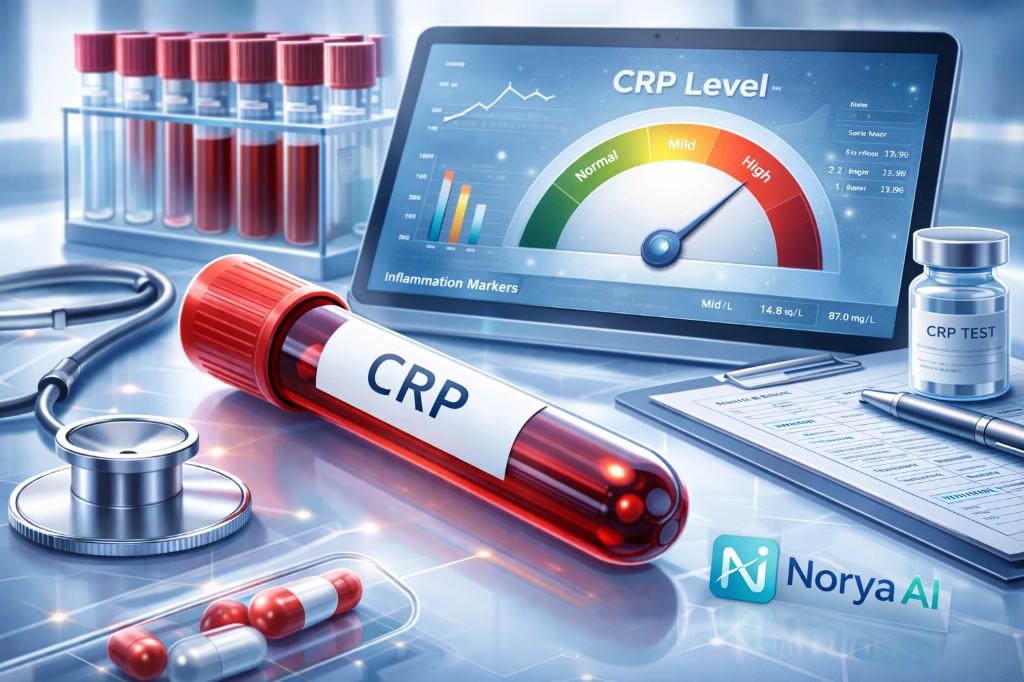
C-reactive protein (CRP) is a protein produced by the liver in response to inflammation anywhere in the body. It is one of the best-known acute-phase reactants: its level in the blood rises when tissue is damaged or when the immune system is activated by infection, injury, or chronic inflammatory conditions. CRP does not tell you where the inflammation is or what caused it; it only indicates that some inflammatory process is active. For that reason, it is always interpreted together with your symptoms, other tests, and a doctor’s assessment.
CRP vs hs-CRP
Standard CRP is typically used to monitor infection or acute inflammation (e.g. after surgery, in sepsis, or in autoimmune flares). It is reported in mg/L and can rise into the tens or hundreds in serious infection.
High-sensitivity CRP (hs-CRP) uses a more sensitive assay and is mainly used to assess cardiovascular risk in otherwise stable adults. It measures the same protein but at lower levels (often under 10 mg/L). Guidelines use hs-CRP ranges such as <1 mg/L (low risk), 1–3 mg/L (moderate risk), and >3 mg/L (higher risk) when evaluating heart disease risk—always in combination with other factors and under a doctor’s guidance.
Why does CRP rise?
Common causes of elevated CRP include:
Infections (bacterial or viral): colds, flu, urinary tract infections, pneumonia, and more serious infections can raise CRP, often sharply in bacterial cases.
Chronic inflammation: conditions such as rheumatoid arthritis, inflammatory bowel disease, or chronic kidney disease.
Autoimmune disease: flares in lupus, vasculitis, or other autoimmune disorders.
Injury, surgery, or trauma: tissue damage triggers an acute-phase response.
Lifestyle factors: smoking, obesity, and a sedentary lifestyle can keep CRP mildly elevated over time.
CRP is non-specific: a high value does not diagnose a condition. Your doctor will use it together with your history, examination, and other tests to narrow down the cause.
What counts as “high”?
Reference ranges vary by laboratory and by assay. Always use the range printed on your own report. The following are rough, illustrative ranges in mg/L (not a substitute for your lab’s reference):
Standard CRP: <5 often considered normal; 5–10 mild elevation; 10–40 moderate; >40 marked elevation; >100 often seen in serious bacterial infection. These figures are approximate and method-dependent.
hs-CRP (for cardiovascular risk context): <1 mg/L low risk; 1–3 mg/L moderate risk; >3 mg/L higher risk. Again, this is used together with other risk factors and only under clinical guidance.
Do not self-diagnose from these numbers. Interpretation must be done by a doctor who can consider your full picture.
What can you do to lower CRP?
There is no single “treatment for high CRP”—the goal is to address the underlying cause. In general, healthy lifestyle measures can support lower background inflammation:
Quality sleep, weight management if needed, avoiding smoking, a balanced anti-inflammatory-style diet (e.g. Mediterranean), and regular moderate exercise.
If your CRP is elevated because of an infection, autoimmune condition, or other illness, your doctor will recommend specific treatments or referrals. Do not start or change supplements or medication based on CRP alone; always follow your doctor’s evaluation and advice.
When should you see a doctor?
See a doctor if you have:
High CRP together with fever, severe pain, shortness of breath, or feeling very unwell.
Unexplained weight loss or fatigue with elevated CRP.
CRP that stays elevated for a long time without a clear explanation.
Other blood tests or symptoms that suggest infection, inflammation, or an autoimmune condition.
Seek urgent care for severe symptoms (e.g. difficulty breathing, chest pain, confusion, or if your lab or doctor has advised immediate follow-up).
What tests might come next?
Depending on your result and history, your doctor may order further tests to find the cause of inflammation or to assess risk. These can include:
Full blood count (CBC), ESR (erythrocyte sedimentation rate), ferritin.
Procalcitonin (often used to help distinguish bacterial infection from other causes).
Liver function tests (LFT), urinalysis, or imaging (e.g. X-ray, ultrasound) when appropriate.
Which tests are needed is a clinical decision made by your doctor; this list is for information only.
Frequently asked questions
If CRP is high, do I need antibiotics?
Not necessarily. CRP can rise with viral infections (e.g. colds, flu), where antibiotics are not indicated. Only your doctor can decide whether an infection is bacterial and whether antibiotics are appropriate.
Does a cold raise CRP?
Yes. Viral upper respiratory infections, including the common cold, can cause a mild to moderate rise in CRP. This does not mean you have a bacterial infection.
Can exercise raise CRP?
Intense or unaccustomed exercise can cause a temporary, small rise in CRP due to muscle micro-injury. Regular moderate exercise is generally associated with lower background inflammation over time.
Is CRP tested fasting?
CRP is usually not strongly affected by a recent meal. Your lab may still ask for fasting if the sample is used for a panel that includes glucose or lipids; follow the instructions you are given.
What is the difference between CRP and ESR?
Both are markers of inflammation. CRP often rises and falls more quickly; ESR can stay elevated longer. Doctors sometimes use them together to get a fuller picture.
Can stress raise CRP?
Chronic stress may be associated with slightly higher CRP in some people. Stress alone does not explain very high CRP; other causes (infection, inflammation) are usually considered first.
Disclaimer
This content is for information only and does not constitute medical advice or diagnosis. Always discuss your results and symptoms with a doctor. Do not start or change treatment or supplements based solely on this article. If you have concerns about your health, seek professional medical care.
Trust & review
How this guide should be used
This article is educational and should be reviewed alongside our medical review, methodology, and transparency pages. Use it to prepare for a clinician conversation, not as a diagnosis.