Creatinine & eGFR Explained: Reading Kidney Function Results
What creatinine and eGFR mean, typical categories, what can affect results without kidney disease, and when to follow up with a clinician.
Educational guide only — not medical advice. Always review results with a qualified clinician.
10 min read
··Last updated
NNoryaAI
What creatinine is and why it’s measured
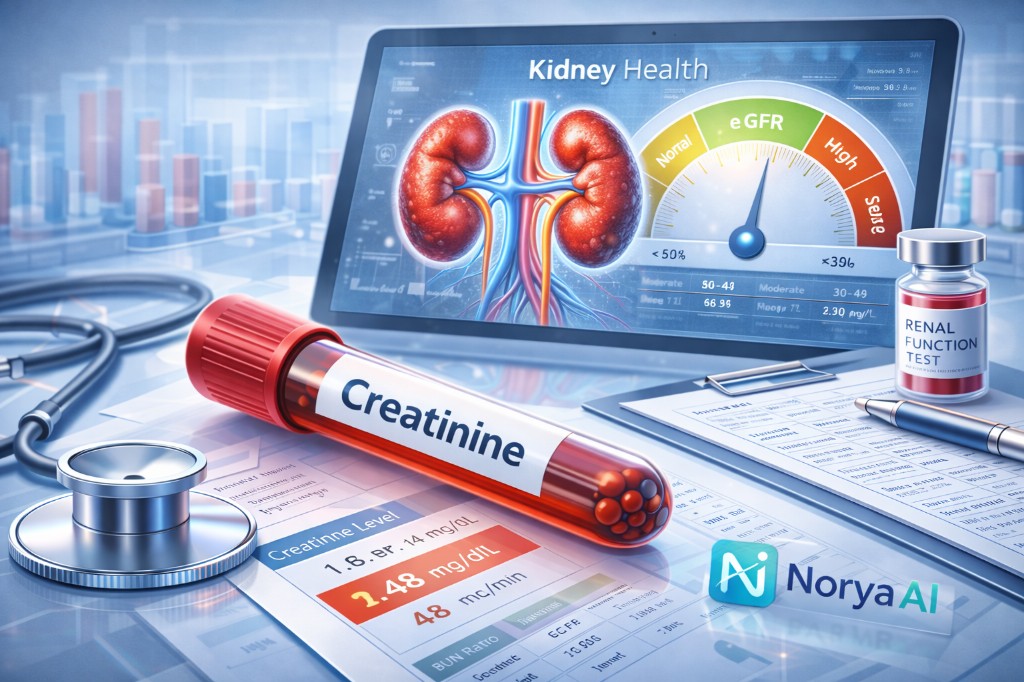
Creatinine is a waste product produced by your muscles as part of normal metabolism. It is released into the blood and filtered out by the kidneys. When kidney function is reduced, creatinine tends to rise in the blood because it is cleared less efficiently. Laboratories measure blood creatinine to help assess kidney function. The result is often reported in mg/dL or µmol/L. Creatinine alone does not tell the full story—body size, muscle mass, age, and sex can affect the level. That is why clinicians often use eGFR (estimated glomerular filtration rate), which adjusts for these factors.
What eGFR means and why it can be more informative
eGFR (estimated glomerular filtration rate) is a calculated value that estimates how well your kidneys are filtering blood. It is usually derived from your creatinine level, age, and sex (and sometimes race, depending on the formula used). eGFR is often reported in mL/min/1.73 m². Because it accounts for age and body factors, it can be more informative than creatinine alone when assessing kidney function. A falling eGFR over time may suggest worsening kidney function and often prompts further tests. eGFR is an estimate; your clinician will interpret it together with other results (e.g. urine tests, imaging) and your medical history.
If your kidney markers were part of a larger chemistry panel, see our metabolic panel results explained guide to understand how clinicians compare creatinine and eGFR with glucose, electrolytes, and liver-related markers. If you also had a urine test, our urine ACR / microalbumin guide explains how albumin leakage adds another layer of kidney-risk context.
Creatinine vs eGFR vs BUN
Marker
What it reflects
Creatinine
Waste product from muscle metabolism; cleared by kidneys. High level can indicate reduced kidney clearance.
eGFR
Estimated filtration rate (often from creatinine, age, sex). Lower value = less kidney filtering capacity.
BUN
Blood urea nitrogen; influenced by protein intake, hydration, and kidney function. Often used together with creatinine.
Your doctor interprets these together in the context of your health and other tests.
Typical eGFR categories
Reference ranges and categories vary by laboratory and guideline. The following is a rough guide for context only; your clinician will interpret your result in your situation. In many guidelines:
≥90: Normal or near-normal (if no other markers of kidney damage).
60–89: Mildly decreased; context matters (e.g. age, other tests).
45–59: Mild to moderate decrease.
30–44: Moderate decrease.
15–29: Severe decrease.
<15: Kidney failure range; urgent medical care is needed.
These categories are for general information. The meaning of your result depends on your age, other kidney markers (e.g. urine albumin), and clinical context. Do not self-diagnose; discuss your results with a clinician.
What can change creatinine or eGFR without “true” kidney disease
Several factors can raise creatinine or lower eGFR temporarily or without indicating lasting kidney damage:
Dehydration: Less fluid can concentrate blood and raise creatinine.
High muscle mass: More muscle can produce more creatinine.
Intense or prolonged exercise: Can temporarily raise creatinine.
High-protein diet or creatine supplements: Can increase creatinine levels.
Certain medications: Some drugs affect kidney function or creatinine; your doctor will consider these.
Lab variation: Slight differences between labs or between draws can occur.
If your result is borderline or only slightly outside the reference range, your clinician may suggest repeating the test (e.g. after rest and hydration) or ordering additional tests to clarify.
Signs that need prompt medical attention
Seek medical care promptly if you have:
Swelling (especially of legs, feet, or face).
Shortness of breath or difficulty breathing.
Very low urine output or no urination.
Confusion or severe drowsiness.
Persistent vomiting or inability to keep fluids down.
Severe weakness or fatigue.
Chest pain or pressure.
These can be signs of serious kidney or other medical problems. This list is not complete; if you are worried, contact a healthcare provider.
Next tests clinicians often use to confirm kidney status
Depending on your result and history, your doctor may order:
Urine ACR (albumin-to-creatinine ratio) to look for kidney damage.
Urinalysis for blood, protein, or other abnormalities.
Repeat creatinine and eGFR to see if the result is stable.
Electrolytes (e.g. potassium, sodium) if kidney function is a concern.
Blood pressure measurement and monitoring.
Glucose or HbA1c if diabetes is relevant.
Ultrasound or other imaging of the kidneys when indicated.
Which tests are chosen is a clinical decision made with you by your doctor.
Practical kidney-friendly habits
General measures that often support kidney health (and are not a substitute for medical advice or treatment):
Hydration: Adequate fluid intake, unless your doctor has restricted it for a medical reason.
Blood pressure and diabetes control: Important for long-term kidney health; follow your doctor’s plan.
Avoid NSAID overuse: Non-steroidal anti-inflammatory drugs can affect the kidneys; use only as directed and discuss with your doctor if you have kidney concerns.
Salt moderation: In line with general heart and kidney health advice; your clinician can advise on your target.
Protein intake: If you have known kidney disease, your doctor or dietitian may give specific guidance on protein; do not change diet solely based on this article.
Frequently asked questions
See the FAQ entries in this article; your clinician will interpret your individual results and advise on follow-up.
Medical disclaimer
This content is for information only and does not constitute medical advice, diagnosis, or treatment. Always discuss your results and any symptoms with a qualified healthcare provider. Do not start or change diet, exercise, or medication based solely on this article. If you have concerns about your health, seek professional medical care.
Trust & review
How this guide should be used
This article is educational and should be reviewed alongside our medical review, methodology, and transparency pages. Use it to prepare for a clinician conversation, not as a diagnosis.