Everything you need to know about fasting glucose, HbA1c, insulin resistance (HOMA-IR), and glucose tolerance tests — with normal ranges and practical advice.
Educational guide only — not medical advice. Always review results with a qualified clinician.
14 min read
··Last updated
NNoryaAI
What Do Blood Sugar Tests Measure?
Blood sugar (blood glucose) tests measure the amount of glucose — your body's primary energy source — circulating in your bloodstream. Glucose comes from the foods you eat and is regulated by the hormone insulin, produced by the pancreas.
Several types of blood sugar tests exist, each serving a different clinical purpose:
Fasting Blood Glucose (FBG) — measured after 8-12 hours of fasting; the standard screening test.
Random (non-fasting) Glucose — taken at any time; useful in emergency settings.
Oral Glucose Tolerance Test (OGTT) — measures glucose before and 2 hours after drinking a 75 g glucose solution.
HbA1c (Glycated Hemoglobin) — reflects average blood sugar over the past 2-3 months.
Fasting Insulin & HOMA-IR — assess insulin resistance even before glucose rises.
Understanding these tests is vital: the World Health Organization estimates that over 422 million people worldwide live with diabetes, and many more have undiagnosed prediabetes.
Fasting blood glucose (FBG) is measured after an overnight fast of at least 8 hours. It is the most widely used screening test for diabetes and prediabetes.
Reference ranges (venous plasma): Normal: 70–99 mg/dL (3.9–5.5 mmol/L) Prediabetes (Impaired Fasting Glucose): 100–125 mg/dL (5.6–6.9 mmol/L) Diabetes: ≥ 126 mg/dL (≥ 7.0 mmol/L) on two separate occasions
Low blood sugar (hypoglycemia) — below 70 mg/dL — can cause shakiness, sweating, confusion, and in severe cases, loss of consciousness. It is most common in people taking insulin or sulfonylureas.
High fasting glucose indicates your body is not producing enough insulin or your cells are not responding to it properly (insulin resistance). Even values in the upper-normal range (90-99 mg/dL) may warrant monitoring over time.
Important: A single elevated reading does not diagnose diabetes. Your doctor will typically repeat the test or order an HbA1c to confirm.
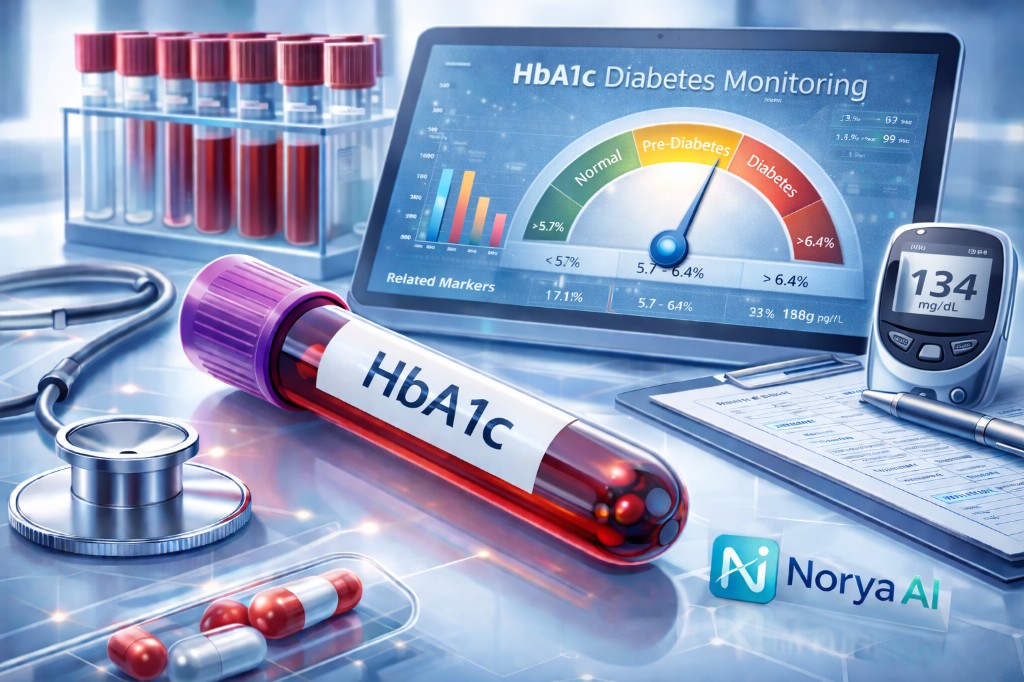
HbA1c (Glycated Hemoglobin): Your 3-Month Blood Sugar Average
HbA1c measures the percentage of hemoglobin in your red blood cells that has glucose attached to it. Because red blood cells live roughly 120 days, HbA1c reflects your average blood sugar over the past 2-3 months — making it far more informative than a single fasting glucose reading.
Stricter target: < 6.5% for younger patients without complications
Relaxed target: < 8.0% for elderly patients or those with hypoglycemia risk
Each 1% reduction in HbA1c lowers the risk of microvascular complications (eye, kidney, nerve damage) by approximately 35-40%.
Limitations: HbA1c can be inaccurate in conditions that affect red blood cell lifespan — iron deficiency anemia, hemoglobin variants (sickle cell trait), chronic kidney disease, or recent blood transfusion.
Fasting Insulin & HOMA-IR: Detecting Insulin Resistance Early
Insulin is the hormone that allows glucose to enter your cells. When cells become resistant to insulin, the pancreas compensates by producing more — leading to hyperinsulinemia. Blood glucose may remain normal for years while insulin levels climb silently.
HOMA-IR is one of the most useful early markers because it can detect metabolic dysfunction years before fasting glucose or HbA1c become abnormal. It is especially valuable in:
Tip: If your fasting glucose is normal but you have central obesity, fatigue after meals, or skin tags / acanthosis nigricans, ask your doctor about fasting insulin and HOMA-IR.
Oral Glucose Tolerance Test (OGTT)
The OGTT is the gold standard for diagnosing gestational diabetes and is also used when fasting glucose or HbA1c results are borderline.
How it works: After an overnight fast, a baseline blood sample is drawn. You then drink a solution containing 75 g of glucose, and blood is drawn again at the 1-hour and 2-hour marks.
The OGTT is more sensitive than fasting glucose alone — it can detect impaired glucose tolerance (IGT) even when fasting values are completely normal. This is especially important because many people with IGT progress to type 2 diabetes within 5-10 years.
For gestational diabetes (pregnancy), different thresholds apply and screening is typically done between weeks 24-28.
Risk Factors & Symptoms of High Blood Sugar
Risk factors for elevated blood sugar / type 2 diabetes:
Overweight or obesity (especially visceral / abdominal fat)
Sedentary lifestyle
Family history of diabetes (first-degree relative)
Age ≥ 45 years
History of gestational diabetes or delivering a baby > 4 kg
Polycystic Ovary Syndrome (PCOS)
Ethnicity (higher risk in South Asian, African, Hispanic, Middle Eastern populations)
Excessive thirst (polydipsia) and frequent urination (polyuria)
Unexplained weight loss
Fatigue and weakness
Blurred vision
Slow-healing wounds and frequent infections
Tingling or numbness in hands and feet
Dark, velvety skin patches (acanthosis nigricans)
Warning: Type 2 diabetes can be asymptomatic for years. Many people are diagnosed only after complications arise. Regular screening is essential if you have risk factors.
Diet & Lifestyle Tips for Healthy Blood Sugar
Whether you have prediabetes, diabetes, or simply want to optimize metabolic health, these evidence-based strategies can help:
Choose low-glycemic foods: Whole grains, legumes, non-starchy vegetables, and most fruits have a gentler impact on blood sugar than refined carbohydrates.
Pair carbs with protein or healthy fat: Eating an apple with almond butter, for example, reduces the glycemic spike compared to the apple alone.
Move regularly: 150 minutes of moderate exercise per week (brisk walking, cycling, swimming) improves insulin sensitivity for up to 48 hours after each session.
Maintain a healthy weight: Losing just 5-7% of body weight can reduce diabetes risk by up to 58% in people with prediabetes (DPP study).
Manage stress: Cortisol raises blood sugar. Mindfulness, deep breathing, and adequate sleep (7-9 hours) help regulate it.
Limit added sugars and sugary drinks: One sugary drink per day increases type 2 diabetes risk by approximately 26%.
Consider the Mediterranean diet: Rich in olive oil, vegetables, fish, and whole grains — consistently shown to lower HbA1c and cardiovascular risk.
Quick win: A 15-minute walk after meals can reduce post-meal glucose spikes by 20-30%.
How NoryaAI Analyzes Your Blood Sugar Results
NoryaAI reads your complete blood work — whether it's a lab PDF or a photo — and automatically:
Identifies fasting glucose, HbA1c, fasting insulin, HOMA-IR, and OGTT values
Classifies results into normal, prediabetes, or diabetes ranges
Flags insulin resistance even when glucose is still in the normal range
Provides clear, plain-language explanations for each marker
Generates a doctor-ready summary with trend tracking over time
Upload your lab report and get your blood sugar analysis in minutes — no manual data entry, no medical jargon.
Trust & review
How this guide should be used
This article is educational and should be reviewed alongside our medical review, methodology, and transparency pages. Use it to prepare for a clinician conversation, not as a diagnosis.